Wednesday, April 26, 2023

Mario's Big Movie

After several weeks of waiting, and the only available day working out, I finally saw The Super Mario Bros. Movie.


I’ll admit, it was a hard sell. Aside from reviews, and the discourse, being an initial turn-off, I wasn’t sure what to expect. Mario, after all, is fun to play, but a movie? From Illumination Studios, the people responsible for Minions? How would that work?

Still, I had nothing to lose. I liked Detective Pikachu and Sonic the Hedgehog, and they weren’t setting critics alight either, so it wouldn’t hurt to give it a shot. Besides, it was a Tuesday, and the prices were discounted. If I didn’t like it, at least I wasn’t paying full-price. So I bit the bullet.

Give the movie credit! It was fun! I won’t get into whether “Peaches” is an Oscar-worthy song, or if Princess Peach is a “girl boss”, because those debates are incredibly exhausting. I won’t even dissect how the movie overuses slow-motion for comedic effect, because that wouldn’t be fair. Instead I’ll zone-in on something that, I think, is more interesting. I think it’s worth examining why video games often don’t work on film.

I know: this is a topic that’s been done to death. I’m also aware that I won’t be adding to the conversation with my thoughts. But I don’t care. This needs reiterating. That, and I want to vent.

One of the big conundrums of adapting video games to movies is converting something from one medium to another medium. More-specifically, converting something from a visual-interactive medium to a purely visual medium. You’re taking a video game, which requires direct engagement, and translating it to a format that requires passive engagement. And you’re doing so in a condensed time frame. Is it any wonder, then, why so many attempts fail?

Even if you somehow adapted a game with a strong narrative, how would you make the jump without losing that interactivity? And how would you do that with a run-time limit? The answer to both questions is “you can’t”. Because video games have different rules than movies. I don’t think enough people get that.

If you somehow strike narrative gold with an adaptation…now what? Video games don’t generally focus on storytelling, true, but those that do still have the player in mind. They’re not passive, “This happened, followed by this” narratives, like movies are. Their stories are focused around what you, the player, will do next. Will you grab that weapon and fight the dragon, or will you avoid the enemy altogether? To power up, or not to power up? In all situations, it’s reliant on the player, not the game.

In some instances, even, there are multiple paths the story can go. It depends on what the player wants: harvest those girls for their energy, or free them of their curse? Defeat final boss A, or go for final boss B? The game might have the end-result predetermined, but you’re influencing the in-between. It’s interactive.

Interactivity on that level isn’t the focus of movies. They elicit responses, like tears, laughter or cheering, but they aren’t based so much on the audience’s decisions. This isn’t to disparage movie narratives. Some of my favourite stories are on film. But the element of choice in video games doesn’t exist with film.

That’s usually why many video game movies fail. Ignoring how so many in the past didn’t understand what they were adapting, a trend that’s now dying off, there’s only so much you can retain when shifting mediums. In the best-case scenario, the movie replays the greatest hits of the game, but without any of the participation. It feels like a hollow callback. And that’s why so many attempts are unsuccessful.

Which leads me back to The Super Mario Bros. Movie. I enjoyed the call-backs to Mario’s history, both overt and covert, and I liked how it gave everyone actual personality traits, but that doesn’t make the movie “amazing”. It’s fun, and I laughed frequently, but that’s not narrative depth. Because, and let’s face it, Mario never really had depth. Nor did he need to.

I think that’s why critics weren’t singing the movie’s high praises. It’s not that the movie was simple, because simple alone isn’t bad. Ponyo’s a simple movie, yet it told a powerful story about respecting your children’s wishes, even at a young age. Simple’s effective when done properly, and The Super Mario Bros. Movie understands this. The problem, however, is that underneath that is lacklustre substance. It’s all, like I said, a hollow replay of Mario’s greatest hits.

I feel bad saying that, especially given that this movie was trying to exceed the sum of its parts. It was, unlike most Illumination movies, actually interesting and unique. It had real passion and talent too, and Chris Pratt as Mario didn’t bother me as much as I thought. Basically, this felt like a movie. But that wasn’t enough to make it a masterpiece.

I’m not sure what could’ve remedied that. Like I said, Mario isn’t exactly deep or profound. Unlike Metroid and Zelda, the franchise leans on “rescue the damsel in distress from the big baddie” constantly. And while Metroid and Zelda don’t have profound stories either, Mario feels especially bare-bones in comparison. This movie tried having some semblance of a story, but I can’t blame it for having little to work with.

Additionally, the debate about “snooty critics not understanding this movie” misses that point. Yes, maybe some were too harsh. They’re only human, after all. But the job of a critic isn’t to please audiences. They’re trained to distinguish patterns and themes that keep resurfacing, and they see more movies regularly than you and I. They watch them for a living. It takes much more to impress them than Mario fans while watching The Super Mario Bros. Movie.

If anything, people should make up their own minds. I’ve liked many movies critics were cold on, and I disliked several they loved. That doesn’t make either of us right or wrong, but rather opinionated. So long as you respectfully disagree while simultaneously understanding why, then guess what? You’re headed in the right direction.

Finally, we need to understand that while video game movies have gotten “better”, they may not ever be “masterpieces”. Because like I said, games aren’t movies. They’re have different rules, they’re written differently and they engage their demographics differently. There might be crossover, but it’s minimal. But that’s what makes the two mediums special. It’s neither good nor bad, it’s reality.

Now then, about that whole “woke VS broke” nonsense…

Friday, April 21, 2023

Der Yiddishe Mandalorian

I finished Season 3 of The Mandalorian.


There are many angles from which to discuss it. I could delve into why I really enjoyed it. Or how Elia Kane was awful and never had a resolution to her arc. Those are worth dissecting, yet I’d rather discuss something personal. This was originally suggested by Jewish Twitter (Jwitter), but it’s grown on me: The Mandalorians are Jewish-coded. Here are 5 reasons why I think that.

1. They wear distinct garb that they value dearly:

Let’s get the obvious one out first. It’s clear that a Mandalorian’s armour’s something they value. While armour isn’t new in Star Wars, many individuals wear it, Mandalorian garb follows the same pattern: a helmet with slits for the eyes and an opening for the mouth. Body armour that covers the hands, feet, elbows, knees, shoulders and chest. And a backpack that carries their weapons and lets them fly.

It's a stretch, but there are some parallels between Mandalorian garb and traditional Jewish attire. The helmet’s comparable to wearing a yarmulke for a male or a sheitel for a female. The body armour is a modest dress code, hinting at Tzitzit, Tallitot and the Tefillin Jews wear in prayer. And the Beskar metal can be read into as Techelet, the blue dye some Jews wear on the fringes of their Tzitzit.

Even the insignias on their garments evoke Jewish imagery. Whether it’s the Mythosaur being Judah’s lion, or their emblem looking like their version of a Star of David, Mandalorians pride themselves on identifiers. Like how Jews today are unified by the Jewish Star, the emblems of Mandalorians symbolize their shared history. It’s almost a guarantee that if you see any Mandalorians, you’ll immediately recognize them. It’s the same for Jews.

2. They adhere to an ancient tradition, yet differ in how it’s practiced:

The Mandalorian creed is rooted in an ancient tradition, arguably one of the oldest in the Star Wars universe. They’re closely-knit and communal, and they adhere to a strict code. They also have rules on how they present in public, including whether or not they remove their helmets. To some Mandalorians, showing your face is heresy, and you must bathe in their ritual waters to atone. For others, the helmet’s not that important.

It's easy to see this parallel the plurality of Jewish practice. Like Mandalorians, Jews have rituals, or Mitzvot, that they adhere to. But even then, there’s no consensus on practicing them. Whether it’s religious sects, religious sub-sects, or regional differences, Jews, like Mandalorians, have different ways of practicing and interpreting customs. It’s that diversity that often makes them at odds.

Additionally, Mandalorians, like Jews, allow converts. But it’s not openly-advertised. Conversion draws ire from those who born into the club, but it’s also what separates them from Jedi, who are born with their abilities. It also keeps them small in numbers. But I guess that’s the trade-off.

3. They have a strong attachment to an ancient homeland, one they yearn for:

Like Jews and Israel, The Mandalorians have a strong connection to Mandalore and its system of planets. The Mandalorian System’s basically Star Wars’ Israel, with each planet being a different city. Mandalore, therefore, is Jerusalem. And it’s rich with history, like how Jerusalem is. This even plays a central theme in stories that feature Mandalorians, like The Mandalorian.

Unfortunately, Mandalore’s been subject to attacks and invasions by foreign entities. Whether it be The CIS, Death Watch, The Galactic Republic or even The Galactic Empire, Mandalore’s seen plenty of war and bloodshed, culminating in it being carpet-bombed by Imperial forces and made uninhabitable. Sound familiar? It should.

That hasn’t stopped Mandalorians from yearning for a return to Mandalore. As Bo-Katan Kryze, this universe’s Davidic leader, states, the yearning for Mandalore’s something many Mandalorians share. It unites them even during disagreements. And they’ll die to achieve it. It isn’t unlike what happened with Jews and re-establishing The State of Israel. (And no, I don’t want to argue semantics.)

4. They’ve been persecuted for thousands of years by foreign entities:

This is easily the biggest link. Similarly to how Jews have been attacked by foreign entities like The Romans and The Babylonians, The Mandalorians been routinely attacked by foreign entities. Yet similarly to Jews, The Mandalorians endured. It’s a cycle of attack, persecution and endurance. And it’ll keep going.

This is best summed up when Paz Vizsla mentions that The Mandalorians have been on the brink of extinction for thousands of years. He mentions they’ve survived all odds, and it’s made them strong. Similarly, despite being .25% of the global population, Jews have defied the odds, and their adversity’s made them stronger. This despite Jews frequently being subservient to foreign nations, sometimes with dire consequences. That’s enough to break any nation, but not Jews.

This paradox makes Jews and Mandalorians most-alike. Much like Jews have been persecuted, so too have Mandalorians. Much like how Jews have come back stronger, so too have Mandalorians. And much like how the Jews’ enemies have failed at eliminating them, so too have The Mandalorians’ enemies. You can’t get more-blatant than that.

5. Their biggest threat is their disunity:

If enduring near-extinction’s the strongest comparison between Mandalorians and Jews, their tendency to in-fight and squabble’s the second-strongest. As Bo-Katan Kryze points out, Mandalorians can only be defeated when they’re not united. Sadly, that happens quite frequently. It probably happens too frequently! Bo-Katan knows from experience, having been part of Death Watch at one point…

This is equally true of Jews. Jews are frequently disunited despite their size, leading to them routinely being at the mercy of foreigners. This disunity’s most-apparent with the destruction of both their Temples, the first by Babylon and the second by Rome. The reason given by tradition for why is different for both, but there’s a common-thread: disunity and disrespect for one-another. And in both cases, it ended poorly.

If disunity makes Jews and Mandalorians weak, then unity makes them stronger. Like the Jewish desire for self-determination that led to a modern-resurgence of Zionism, so too does Mandalorian yearning to reclaim Mandalore lead to them reclaiming it. And under Bo-Katan’s leadership, they’re eventually able to do that in Season 3 of The Mandalorian. It’s a gruelling experience, with many losses, but hey! That’s also how it was with the Jewish people.

There you have it: 5 reasons why The Mandalorians are Jewish-coded in the Star Wars universe. Perhaps all these parallels are presumptuous, but would you have preferred a Shonen connection?

Monday, April 17, 2023

3 Awful Movies

I don’t enjoy ripping on bad movies. Sure, it’s definitely cathartic, getting my pent-up energy out. But it dampens my mood. Additionally, while I’m often critical of movies people love, I try and recognize redeeming qualities. It also takes a lot to make me hate something, as I’m easily-entertained. Still, every-so-often that threshold’s breached, and here are three examples. I apologize if anyone likes these films:

1. Super:

James Gunn’s oeuvre pre-Guardians of the Galaxy was atrocious. He never seemed to strike that balance between bizarre and sincere outside of Slither, a movie I haven’t watched. I know his early work has a cult following, but I’m not sold. Yet while I could’ve included “Beezel”, the short he directed for Movie 43, as a double-whammy, I’ll let that one slide because while it’s upsetting and disgusting, it’s only a few minutes long and gets lost in the movie as a whole. I can’t say that for Super.

The premise is interesting enough: a Christian man loses his wife to a drug dealer and takes the law into his own hands. Along the way, he adopts a superhero-like mantle and beats up people for breaking laws, all while saying his catchphrase “Shut up crime!”. He even acquires a sidekick in the form of Boltie, a sadistic 20-something with anger issues. In the hands of someone like Paul Verhoeven, this could’ve been a black comedy poking fun at how disturbed superheroes are. Then again, that’s what The Boys is for…

There’s a lot to dissect here. Like how the main character feels it’s his “Christian duty” to exact vengeance against wrongdoers. Or how he smacks people in the head with a wrench, potentially giving them concussions. Or how Boltie gets even with someone by, and I kid you not, having him run-over by a speeding car. This all has potential to be funny, but Gunn appears to use Super as a vendetta machine. At least, that’s how it reads.

Perhaps the worst part is that the “Super” mantra doesn’t mesh with the protagonist’s main goal. We see the drug dealer inject a needle into his wife’s foot, and for that moment we feel bad. But it’s brief. The “inciting incident” is forgotten about for most of the runtime, instead dedicating itself to antics that would’ve led to arrests or lawsuits. We don’t return to “saving my wife from a drug dealer” until the finale, by which point my patience has run out. Oh, and Boltie’s face gets blown in half with the most-unconvincing practical effect I’ve ever seen.

Speaking of Boltie, let’s talk about her. I hate her more than the protagonist. At least he did everything out of misplaced justice. Boltie, however, is a sadist. She not only maims and attacks people, she enjoys it. For her, being a superhero is a way of releasing her inner sociopath. She even calls waiting for crimes “boring”.

Of course, I must mention the elephant in the room: the rape scene. I feel guilty judging Gunn for that, knowing what happened to him in real life, but that was all kinds of awful. What’s worse, it was my first realization that I’d buried longstanding sexual assault trauma for too long, even if I didn’t understand why yet. Seriously, what gives?! I know that rape can be an effective tool for storytelling when done properly, but it requires some sensitivity that this movie lacks.

That’s what Super is, though. It’s so tasteless that when Marvel chose Gunn for the Guardians of the Galaxy franchise in 2012, my heart sank. “How could Disney allow this man to direct that?”, I thought. Thankfully, this ended up being a great choice, beginning Gunn’s change into a more thoughtful filmmaker. That doesn’t make Super any less-awful, though.

2. Exodus: Gods and Kings:

I’ve covered this movie in greater detail before, so retreading here feels a redundant. However, Passover recently ended, so I feel like traumatizing myself. Why? Who knows, but I’m dragging you along with me!

Essentially another retelling to the Exodus story, as if there weren’t enough of them, Exodus: Gods and Kings is Gladiator if it were set in Egypt, tried to “update” Scripture and went on for longer than necessary. In other words, what if Ridley Scott actively crapped on the story? I know that sounds mean, but you sit through this and not feel the same! I dare you!

What does this movie do wrong? What doesn’t it do wrong? Moses is a gladiator, for some reason. I’m sure that Biblical Moses would’ve engaged in several wars, he was an Egyptian prince, but that mentality never leaves. Moses doesn’t become a shepherd who wields a staff, he remains a conqueror. He even has a sword. That’s a…choice, and it ruins his character!

How about Moses’s relationship with God? That’s even worse here! Firstly, shame on this movie for making God a child with anger issues, even if he’s the best actor in the film (which is embarrassing given the casting). And secondly, that no one else can see Moses arguing with this child makes Moses schizophrenic, which is tone-deaf because he was the progenitor of a major world religion. It also trivializes schizophrenia.

Perhaps the movie’s biggest sin is the “Scientific Plague Theory”, which both misses the point and is an example of fitting modern sensibilities into a society that believed in omens and curses. Ancient Egyptians weren’t people who debated the logic of The Nile River turning red, they simply viewed it as deicide! And it grinds the movie’s pacing to rationalize this. But it does this with all the plagues, as if we need them spelled out. Bite me!

That’s the problem: the movie takes a fantastical story, one rich with meaning, and makes it into a flat, uninspired end-product. I haven’t even gotten to the casting, because that’s issue #40. Yeah, having Egyptians played by white people isn’t even this movie’s biggest offence. How does that work? Can someone explain it to me please?

This movie sucks. If you want a retelling of the Exodus story that respects your intelligence, watch The Prince of Egypt. Sure, it’s animated and a musical, which might be a turn off to some, but it does in roughly 90-minutes what this movie can’t in over 2-hours. And before anyone complains, this movie cribs enough notes that they warrant comparing. I’m not taking any questions.

3. The Passion of the Christ:

Now we get to the big one. I can go on forever about my previous two entries. I can rag on Super for being incredibly tone-deaf. I can drag Exodus: Gods and Kings for insulting me as a religious person who understands the source material. But they pale when compared to The Passion of the Christ. At least both movies have stories, however poorly they’re told.

The Passion of them Christ doesn’t. Or, at least, it doesn’t for most of its runtime. It starts out decently, involving the selling of Jesus to the Romans, but then it turns into a movie about Jesus being whipped and tortured. And it never lets up. I remember watching this as an ancillary source for a university class, and my younger brother decided to watch it with me. By the time it was over, we understood why our Jewish community had been warning us about this film. Because we both felt miserable.

I’m being serious. It’s one issue to depict the last day of Jesus’s life. There’s plenty I can say as a Jewish person, and I fully-admit my biases. But this isn’t about that. No, it’s a torture porn movie. I wish I were kidding.

Perhaps the film’s biggest crime is that it shows, in graphic detail, Jesus getting beaten and whipped in the streets of Jerusalem. Jesus gets flanked and falls so frequently that it becomes monotonous. The whole time, I feel guilty and uncomfortable. And then I get angry that I feel that, leading to exhaustion. But it keeps going, so I’m experiencing emotional whiplash constantly.

The only times the movie isn’t that are when it flashes back to moments where Jesus expresses his Divine perfection. Whether it’s fixing a broken table, or healing a sick man, these are welcomed because they aren’t about someone being beaten. But they’re brief. Because God forbid a movie actually be interesting, right? I’m already exhausted writing this…

The torture ends when Jesus is pierced by a spear in the finale. Even then the movie tosses one last insult by correlating his death with the destruction of The Temple. Setting aside all the Antisemitic imagery prior, be it Jewish kids with horns, or Satan watching from the shadows, Jesus’s death leading to The Second Temple collapsing is the worst offender. It’s not only ahistorical, it guilts the Jewish people further by connecting torture porn to a major tragedy in Jewish history. Why?

Ignoring my Jewishness, which is hard, this movie isn’t exciting or compelling. When it’s not Antisemitic, it’s uncomfortable. The torture Jesus endures is so graphic that it’s unsettling, and it becomes a chore because it drags. I appreciate that the movie strives for period accuracy, including Jesus speaking in Aramaic, but that’s blindsided by one of the most-miserable filmgoing experiences I’ve endured. I don’t even care if it’s “true to The New Testament”, because if that’s true, and I doubt it, then The New Testament’s a hateful text.

If any good came from this movie, it’s all indirect. I appreciate that The Passion of the Christ began an interfaith dialogue between Jews and Christians. I also appreciate that many devout Christians despise it. But the damage is done. And while I rarely get offended by reviews from the late-Roger Ebert, him giving this one 4-stars is the exception. It doesn’t deserve that.

Anyway, that’s it for hating films. I need to detox badly…

Sunday, April 9, 2023

A Majors Problem

Like most people, I thought Jonathan Majors’ Kang was the highlight of Ant-Man and the Wasp: Quantumania. I say this having enjoyed the movie, even tolerating its interpretation of M.O.D.O.K.. But Majors delivered on an otherwise-uninteresting comic book baddie, giving him menace while revelling in campy. Ever since his character debuted in Loki, I was looking forward to what he’d bring to The MCU. That he seemed genuinely excited to be part of it helped.


Unfortunately, Majors as Kang seems too good to be true given what we now know. It was alleged that Majors choked his girlfriend to the point of her passing out, followed by an arrest for domestic abuse. Majors’ lawyer then denied the charges by…revealing private texts that reconfirmed everything. On top of that, there are suggestions Majors was abusive on-set, making him The MCU’s answer to Ezra Miller. All that’s missing is the confirmation that Majors leads a cult…

This is bad news. It’s bad news because it’s bad PR for Marvel, and it’s bad news because it’s another example of an openly-pleasant face in Hollywood having dark secrets. It’s also frustrating as someone who was looking forward to what Majors had to offer in general. I know that last point’s superficial, but I don’t care. Let me disappointed.

The question that arises is, “Now what?”. Contrary to what Majors’ lawyers claim, this hasn’t been buried. Nor is this the end of the drama, as suggested by the reports of Majors’ behaviour on-set. Marvel’s at the same crossroads The DCEU and Warner Bros. were at when Ezra Miller’s behaviour became public: a star with baggage that’s compromising their upcoming films. It’s a bad look, essentially. And it needs to be remedied.

There are suggestions being thrown around online of possible remedies, all varying in quality. The first is to recast Majors. I’ve heard the option of John Boyega as a replacement, which I can get behind given that he looks like Majors. It’d even make sense given that Kang has variants in The MCU, so that could explain the change in actors. It’d also, as a side-note, give Boyega a second-chance in Hollywood, given that he was blacklisted for speaking up against racism following George Floyd’s murder.

This sounds great, but there’s a problem: Majors has a contract with The MCU. And given that actors are unionized, firing him midway would be difficult. It doesn’t help that he’s been in one show and a movie, with a second season of said show debuting this year. He’s locked-in as Kang, so replacing him is challenging. I’d love for Boyega to get another opportunity to shine, though.

Another suggestion is scrubbing Majors from what he’s already been in, like what happened to Kevin Spacey once allegations of misconduct were brought up about him. It’s great in theory, but costly in practice. Given how VFX artists are already exploited by Marvel, I also doubt they’d be happy about that. Not to mention, it’s revisionist history. And art deserves better than that.

Then there’s halting production on further projects involving Majors. This, like scrubbing his presence, would be costly, hence not worth it. It’d also ruin The MCU’s release schedule, something already impacted by the pandemic. It’d be a no-win situation for The MCU, which is already in a no-win situation with Majors. Of all the suggestions, this is probably the least-likely to happen.

Finally, there’s pretending nothing’s wrong. This is the easiest one short-term, as it allows everything to resume as scheduled, but it’s the worst one ethically. While Majors isn’t an anomaly in Hollywood, as even talented individuals have skeletons in their closest, ignoring what Majors has done does no one, especially his girlfriend, any favours. It also gives him free reign to continue his behaviour, which isn’t great. In other words, I’m not a fan.

Really though, the solution is out of my hands. But outside of that, it sucks that people are using this as a partisan chip for their grievances. For MCU diehards, it’s about “How will this impact Kang?”, while DCEU diehards are pointing at the hypocrisy of this and many anti-superhero film enthusiasts are hoping this is the end of superhero cinema. All three groups are wrong. Not only does Kang not matter here, but this doesn’t exonerate Miller’s behaviour and cheering about the death of superheroes is petty and gross. Also, anyone not concerned about Majors’ behaviour needs to get out more.

Ultimately, I’m at a loss. Like I said, I enjoyed Majors as Kang! He was the right actor to bring this character to the big-screen, and he felt like a genuine threat! But I can’t ignore what he’s done. And given my own history, I’d feel like a hypocrite if I turned a blind eye.

So yeah, that’s what I have to say here. I’m sure there’s more I could add on a legal level, but I’ll avoid that because I’m not a lawyer and, therefore, inexperienced there.

Tuesday, March 28, 2023

Crosshair and Villainy

(Warning: The following contains spoilers. Read at your own risk.)

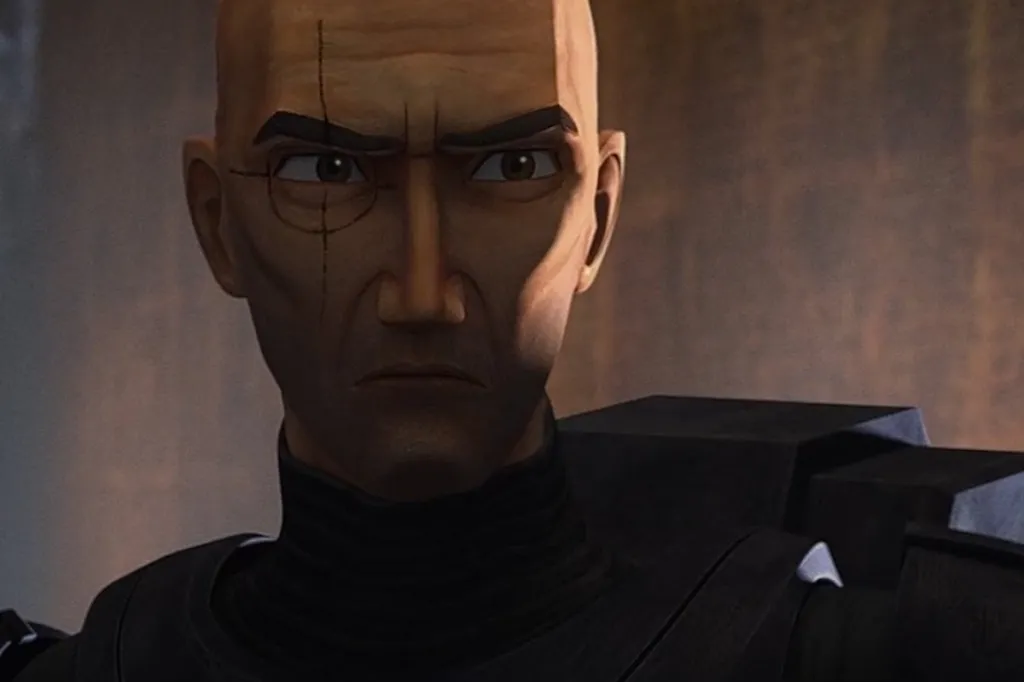
I’m overdue for a piece on Star Wars: The Bad Batch. Truthfully, while a great show, merging the best of Star Wars: The Clone Wars and Star Wars Rebels, it’s been hard to say more than “It’s great, you should watch it!”. So I’ve put it off until now. But I’ve finally found something to say about Crosshair. More-specifically, how Crosshair’s been characterized, as well as what that says about Fascism’s adherents.


Crosshair was introduced with Clone Force 99 in Star Wars: The Clone Wars. The sharpshooter of the group, he always had an edge that the rest of his unit didn’t. He was cold, calculated and off-putting, barely raising his voice beyond a whisper. But like the rest of his team, he got the job done. And that made him irreplaceable.

The real test of character came in the debut episode of Star Wars: The Bad Batch. While fighting on planet Kaller, Order 66 is initiated by Emperor Palpatine, activating every Clonetrooper’s inhibitor chip and forcing them to turn on their Jedi. While most Clones obey the order, Clone Force 99 doesn’t…save Crosshair. Being a cold soldier, Crosshair fires at Padawan Caleb Dume and begins his descent. He even questions the loyalty of his comrades on Kamino, leading to him being taken by Admiral Tarkin, having his inhibitor chip cranked to the max and turned into a weapon for The Galactic Empire.

Most of Season 1 has Crosshair’s appearances focusing on trying to take down his former teammates, with some exceptions. In Episode 3 Crosshair leads a crew of voluntary recruits to finish an unfinished assignment: execute some rebels led by Saw Gerrera. When one of his recruits refuses, Crosshair shoots him and orders the rest to “finish the mission”. All the while, he stands there and watches. Crosshair might be in Order 66 Mode, but he's enjoying it.

Crosshair’s handed a crossroads moment in Season 1’s finale. He captures Hunter, his former leader, and brings him to Kamino to bait his old crew. It doesn’t take long for them to arrive, and he’s tasked to take his team of recruits and kill them. But he doesn’t. Instead, he assassinates them and lectures Hunter about “abandoning” him. Hunter says, “We didn’t have a choice”, to which Crosshair replies, “And I did?” It’s a tense moment with plenty of great lines, including when Crosshair mentions that he’d had his inhibitor chip removed “a long time ago”. Which begs the question: was Crosshair always bloodthirsty, and his teammates had pacified him?

To make matters worse, Admiral Rampart of The Galactic Empire orders a strike on Kamino, causing it to sink. As Crosshair’s forced to work with Hunter, Echo, Wrecker, Tech and Omega to escape, we see glimpses of what could’ve been. Hunter and company really do care about Crosshair, and he knows that. But his duty to The Empire presses on his mind. We even get a hint that his inhibitor chip might still be active when he massages his temple at the end of Episode 16, and that he lied about removing it.

We don’t see Crosshair again until Episode 3 of Season 2, when he’s assigned to Commander Cody and dispatched to Desix to rescue an Imperial officer. There’s an interesting exchange that Cody and Crosshair have about Clone loyalty early on. Clones, states Cody, are increasingly defecting as they question The Empire’s motives. Crosshair makes note of this, pointing out that “they’re traitors, like the Jedi”. Does Crosshair mean that, or is that his sense of duty talking?

Either way, Crosshair and Cody free the captured officer. Said officer then orders them to kill the Separatist leader that’d captured him and hang her body in the public square. Cody refuses, opting for a peaceful path. But no sooner can he justify himself when Crosshair executes the Separatist personally. The next day, Crosshair’s informed by Rampart that Cody’s gone AWOL.

Why’s Crosshair blindly obedient to The Empire? He’s had many opportunities to renege his loyalty, and he’s even abandoned on Kamino. If he’s so disposable by them, why go back? Is it his inhibitor chip, or something else? Who’s to say?

This speaks volumes on how Fascists operate. In Star Wars particularly, The Empire holds no allegiances to its own. Krennic is the architect of The Death Star, but he’s killed by it when it fires on Scarif. Luke Skywalker destroys said Death Star, killing thousands of soldiers, but Emperor Palpatine orders a new one created. Even when Darth Vader dies, no Stormtrooper helps him. To The Empire, everyone’s disposable.

So why stay? The obvious answer is “a sense of duty”, but I don’t buy that. As Crosshair shows, The Empire doesn’t value its soldiers. Why, then, does he come back, even after being treated like garbage? What makes the cause appealing?

I think the answer lies in who The Empire attracts. Like real-world Fascists, The Empire’s all about control and subjugation. It’s quick to turn on its own for political gain, but it compels those who are like-minded to join it. Crosshair, in that sense, isn’t anomalous. He’s simply a really efficient cog in a machine that doesn’t value him.

That’s the real tragedy. While it’s true that the Clones were all victims, being forced to turn on their leaders and absorbed into an entity that didn’t value them, Crosshair’s a special example of that. Remember, Crosshair isn’t a standard Clonetrooper. He, like the rest of Clone Force 99, is unique, efficient. So him falling victim to the same trap as other Clones is even more-upsetting.

Nevertheless, Crosshair’s enjoying his descent way too much. Like Zuko from Avatar: The Last Airbender, he feels purpose in his mission. And like Catra from She-Ra and the Princesses of Power, he revels in the hunt. But unlike Zuko and Catra, I doubt there’s a way out that doesn’t involve death. I could be wrong, but Crosshair has too much blood on his hands.

I’ll conclude by mentioning this: in a recent piece, I stated that the key to a good antagonist is having sympathy written for someone you despise. Crosshair’s exactly that. He’s a villain who enjoys being evil, but he’s also exploited by a system that doesn’t value him. It’s not unlike how Fascists are drawn in by power, then discarded when no longer useful. It’s a sad, vicious cycle, something Star Wars: The Bad Batch isn’t afraid to call out.

Tuesday, March 21, 2023

Rolling a D20

Dungeons & Dragons is something I only recently got into. And by that, I mean this year. I’d heard a lot about it for years, and even wanted to try it out, but I couldn’t find a time that worked. It was only in January that I found something on Thursday evenings. But now that I’ve enrolled in a campaign, I understand the hype. Because when it’s not in the planning stage, it can be lots of fun.


There’s a new movie premiering centred around the game: Dungeons & Dragons: Honor Among Thieves. While it was announced months ago, I waited to seek out the trailer. But having seen it, I’m hooked. It looks fun, and it made me laugh at one point. That’s all I needed.

There are some hopes and aspirations I have, so I’ll share them.

Firstly, I hope the movie has jokes. And not only jokes, bad ones. Bad jokes that distract from the story, but are funny nonetheless. Jokes that feel pop-culture-heavy and dated, some of which break the 4th wall. When you get down to it, that’s half of the fun. To demonstrate, here are the highlights from my campaign:

When designing characters, which took an entire session, one of the participants created a Frankenstein’s monster from different body parts and armour. When asked to name the character, she chose the equivalent of “Generic Name”.

In our first story session, one of us, an orc, barged in a tavern and demanded food. When given a bowl of slop, he wolfed it down and belched loudly, creating a mess. My response? “Great, something else to clean up.”

Shortly afterward, said orc wandered off to go find The Sunless Citadel, which was our map. Along the way, he encountered three enemies made of wood. After defeating them, he proceeded to eat them.

Upon entering the cave to The Sunless Citadel, the whole party, myself included, bragged about lessons our in-game fathers had taught us.

When we got to a nearby cavern, I made a comment about dwarves and their height. This offended a fellow campaigner who was a dwarf mage, and he went on a rant the entire way down.

When it was my turn, I tossed a giant rock down to see what the distance was. It attracted three, large rats. But not to worry, once we defeated them the orc ate them too.

There was a narrow staircase leading to The Sunless Citadel. Since my character was acrophobic, or afraid of heights, I was strapped to the chest of another character, a giant, all the way to the bottom. “Generic Name” mentioned that if everything went poorly, they could throw me into the abyss. I then protested and explained that my character’s acrophobia stemmed from childhood trauma.

Once at the bottom, I accidentally activated a trap door. After arguing over who’d save me, the giant volunteered. Relieved, I said, “I guess I should consider you my ‘get out of trap free’ card!”

When we saw a button hanging on a wall, I pushed it. A spike came out that dealt me damage, followed by three skeleton warriors. We beat them, but not before almost killing our necromancer. Also, our orc wanted to eat the corpses.

A little while in, we spotted a glowing orb making sounds. Every time someone approached it, we darted in the opposite direction out of fear. When the orc was confronted about it, he said, “It was like watching a Tim Burton movie.”

Not long after, we discovered and befriended a dragon keeper who’d lost his dragon to goblins. Initially, “Generic Fighter” braced him for the worst, causing him to run away. We caught up to the dragon keeper and convinced him we weren’t a threat. Said dragon keeper started shouting “tickle-fresh”, which the orc mistook as a sign to tickle him. He also put a frozen dragon scale in his mouth, and we had to roll a D20 to remove it.

Upon meeting the dragon keeper’s community, the orc tickled a baby and was bitten by it.

When confronting the king of the goblins, the orc suggested doing The Chicken Dance. When that didn’t work, he yelled at him, initiating a fight we nearly lost. It was here that I asked, “Why is our strongest member also our lamest?”, to which the orc replied, “That tends to happen with my characters.”

We were saved at the last-second by “Generic Name” rolling a D20, getting a 20 and cleaving the king in half.

I also almost died and was sent to a dungeon, and I woke up with a death hangover. The remedy? A Devil’s Eggnog. (Basically a Prairie Oyster from Cowboy Bebop.)

When we finally found the dragon, the orc tried speaking garbled Draconian. The dragon got offended and stormed off. “Generic Name” then asked what’d happen if someone failed at speaking Orcish, to which he responded, “I’d laugh”.

(We’re not even done our campaign, FYI.)

Anyway, this goofy improvisation’s integral to the experience. And I’ll be mad if the movie doesn’t have it.

Secondly, I want good chemistry between the leads. This might be based on a game with contrivances, but it’s a movie. And it needs characters who work well together. You can have as many fantastical and nonsensical elements as you want, but if the leads don’t mesh, you’re setting yourself up for failure. Fortunately, that appears to be a non-issue.

Thirdly, I want meta-references. I want call-backs to this being a campaign with nonsense. I want hints at the different dice, including the D20. I want moments that distract from the story, as well as characters bobbing in and out depending on availability. And I want the episodic nature of the campaigns here, including cliff-hangers and expository recaps. I don’t know if all of this will work here, but it’d be nice to have some of it.

Finally, I want this movie to go all-out. This is D&D, where the story’s only limited by the people playing it. If there isn’t even a fraction of the chaos this game’s notorious for, I’ll be disappointed. In fact, I’ll be angry. Because D&D deserves better.

Ultimately, I want to have fun. It’s an action-fantasy epic in the vein of a self-aware comedy, complete with quips and meta-humour. That’s all I’m asking for, and I hope it delivers. Fortunately, it appears to be doing that, judging by reviews. But we’ll see soon enough.

That’s about it. If you’ll excuse me, I have some more goblins to slay…

Tuesday, March 14, 2023

Selective MCU Nostalgia

I need to get something off my chest.

Hmm… (Courtesy of The Cosmonaut Variety Hour.)

The above video was published on YouTube a few days ago. It’s from an interesting content creator. I’ve seen videos from him before, so I know what to expect. But I don’t agree with it, for several reasons. Here’s why:

Forewarning, this isn’t to slight the poster. I like Marcus’s content, even if I don’t watch all of his stuff. He’s (mostly) fair, even while hard on something, and I appreciate him recognizing that not everything is for him. However, I think Marcus is being overzealous and selective about Phase 4 of The MCU. Specifically because many of his complaints aren’t clear-cut when juxtaposed with the franchise’s history.

Let’s start with the obvious: the movies feel rushed. This might be true, but The MCU has churned out several projects each year (with a few exceptions) since its inception. The only part I agree with is that The MCU’s been going overboard lately with its output. We had 4 movies and 5 shows in 2021, 3 movies, 2 short-films and 4 shows (if we’re counting I Am Groot) in 2022, and we’re getting 3 movies and 2 shows this year. By MCU standards, that’s a lot. But considering ex-CEO Bob Chapek’s strategy, I’m not surprised.

Another complaint I can get behind, though not entirely, is the rushed effects and colour-grading. This has become a sticking point for many people, and it’s definitely true. But it’s not exclusive to Marvel movies, as many films and shows with VFX artists have struggled. Besides, The MCU having “unfinished” effects isn’t new. People were pointing it out with Black Panther in 2018.

There are two problems with this complaint. The first is that bad visual effects aren’t a new issue. They’re not even new to superhero movies, as evidenced by Raimi’s Spider-Man films. Remember how rough the first movie’s CGI was? Remember how The Green Goblin flying on his glider looked fake and goofy? Remember how bad some of the fights looked, and how dated others are now? Remember how no one cared, because we were invested anyway?

The second is that many of the complaints here centre around nonsense. Axel’s first projection looking crappy? He has no experience yet, of course it looks bad. Kamala’s powers looking crystallized? That was the point. M.O.D.O.K. looking ugly? He’s an enlarged head!

Of everything people could complain about, people pick the most-insignificant details. Besides, did everyone forget the monstrosity that was skinny Steve Rogers? I didn’t! It looked terrible, but I didn’t care because I was invested. That’s what matters, not if the effects are bad!

Another complaint that gets mentioned a lot, and this isn’t only Marcus’s doing, is that of aimlessness in Phase 4. I disagree. I not only don’t mind the lack of immediate cohesion, I also think there’ve been bits and pieces of connective tissue. Marcus’s complaint about the conflict of Eternals not getting mentioned again, for example, isn’t true, because She-Hulk: Attorney at Law joked about it, and it’ll be the focus in Thunderbolts. Additionally, Marcus saying that the stories don’t connect is strange given that The MCU hasn’t tied up everything together 100%.

Perhaps this is most-apparent in The Incredible Hulk. That movie teased a villain reveal that hasn’t come to fruition. You know, that moment where Bruce Banner hits a scientist with radiation while trying to get his Hulk persona under control, and the scientist briefly changes? Did you catch that? Or were you not paying attention? Regardless, it’s been 15 years...

Even outside of that, The MCU’s notorious for constantly improvising its continuity. And it hasn’t always been subtle about that, teasing possibilities in well-loved entries. Iron Man, a movie famous for having a half-finished script, teased War Machine, and it used SHIELD’s full, unabbreviated name several times before shortening it. Given how so many people consider it one of The MCU’s best, you’d think that’d be discussed more…

Much of Phase 4’s content being “bad” is subjective and rooted in bigotry. This isn’t to slight Marcus’s concerns, but She-Hulk and Ms. Marvel have received flak for merely existing. Remember when She-Hulk twerked for 5 seconds, and that somehow warranted outrage? Remember when Ms. Marvel was criticized for being “woke”? Remember the “M-She-U” nonsense? I do.

This “M-She-U” term is used as a justification for how The MCU’s “declining in popularity”. While most recent entries haven’t done pre-pandemic numbers, some, like Spider-Man: No Way Home, have. (And yes, that’s including rewatches.) A few of the newer movies, at least superficially, have also embraced queer text. This has alienated several foreign markets, where that’s still taboo. And outside of that, I doubt movie theatres will fully go back to pre-COVID numbers.

Even with the newer content, people have zoned-in on non-white males in prominent roles as “wokeness gone too far”, despite that dating back to Black Panther. It also was in a scene from The Avengers: Endgame that The Boys cast shade on. The MCU has always been “woke”, and that people are only catching onto that now is quite telling.

By the way, The MCU has better antagonists now too! Remember the villain from Thor: The Dark World? Did you know his name was Malekith? Do you remember anything about him? I only remember that his design was interesting, which sucks given that he’s Marvel’s answer to The Joker in the comics.

The MCU’s villains are more-interesting now than a decade ago. Even Yellowjacket was fleshed-out more in Ant-Man and the Wasp: Quantumania as M.O.D.O.K., hence why the character change didn’t bother me. I say this knowing that Ant-Man was better overall. If you want to criticize modern MCU antagonists, at least criticize older MCU antagonists. It’s only fair!

One final note is The MCU’s overall quality. I agree that MCU fatigue hasn’t kicked in yet, and that The MCU movies and shows have an obligation to be better. But that doesn’t mean that they’ll all be equal, or even hits. That’s not only impossible, it’s not fair to the entries overall. The Ant-Man movies will always suffer when they’re not lighthearted palate cleansers, as Ant-Man’s a goofy character. Conversely, making Black Panther a complete joke ruins the character. Even within The MCU, not everything works the same way.

I could go on forever, but I want Marcus to understand, again, that nothing I’m saying is personal. I respect him and agree with him much of the time. Even with this video, which I don’t agree with, I can at least see his arguments. And I know he wants what’s best for The MCU. That’s more than I can say for most complainers.

That said, Marcus’s words can and will be used as ammo by detractors of The MCU. It’s making discussing these movies exhausting. Especially when many of these complaints can be retroactively lobbed at The Infinity Saga, which was a perfect series of films that had no low points whatsoever. (And yes, I’m being sarcastic. How could you tell?)

Regardless, I’m definitely interested in what Kang can bring to the table. I only hope he delivers…

Popular Posts (Monthly)

Popular Posts (General)