Friday, January 10, 2020

The Best of the Decade: Animated Movies Style!

The 2010’s were unusual. Despite learning more about myself, I sometimes felt my personal growth happened too slowly. If you’d have told me that in 2020 I’d still be living at home and struggling to find work, I’d have called you crazy. The only part I’d like is switching hobbies from video games to movies, following the discovery of Studio Ghibli.


While the 2010’s were a mixed bag, its output of films, particularly animated, was strong. It’s easy to write movies off as “creatively bankrupt” and “out of ideas”, but there were some genuinely excellent cartoons released in that window. And what better than to talk about them?

This’ll be me picking my favourite animated film of each year, talking about it and giving some unique perspective. It’ll be subjective, personal and somewhat mainstream. I tried having variety, but I don’t really have the money or resources to see films that aren’t widely-accessible. If that bugs you, make your own list.

Also, there’ll be spoilers.

2010

2010 was, by far, my favourite year in film. It was also a year with relatively few animated films, but they were almost all high-profile. Yet of the three I saw in theatres, Toy Story 3 was the best. It seemed like a shoe-in, it was Pixar capping off a then-excellent trilogy, but given what Pixar’s output would be for the next few years, it seemed a miracle in hindsight that this one was as good as it was.

What made this movie work is that it provided a mature take on the franchise. I’m not the most-diehard of Toy Story fans, the first two movies are solid, but I’ve always loved the concept behind them and wanted the franchise would take more ambitious turns. Toy Story 3 does that, being a prison escape movie with a brief trip to “Toy Hell”. It’s incredible to see what the franchise was willing to do, but it did it! And it did it with an ending that (almost) made me cry.

My only complaint is Lotso. He’s not a bad villain, but his fate has always felt cheap and anticlimactic. There’s something disappointing about your big baddie ending up strapped to a truck and taking in the fumes for eternity. It feels lazy, but not enough to ruin everything else. (Which, thankfully, is amazing.)

2011

This was tougher than 2010. Despite there being more animated films, they weren’t as high-quality. Nevertheless, my pick for best of 2011 is the most out-there story-wise while also being pretty standard. I’m choosing Rango, or my favourite Nickelodeon movie. Sue me.

I haven’t watched the film in a while, but I still have it ingrained in my mind: the humour? All on-point. The character designs? Gritty, but in a palatable way. Even the writing, which feels incredibly adult, is top-notch, and that’s hard considering how easy it is to play it safe. Of course, having a set piece set to Ride of Valkyries doesn’t hurt.

My one regret is that Johnny Depp voices the lead. Considering what we know in hindsight, he’s now another Mel Gibson from Chicken Run. More than the “Liar Revealed” trope, or even some of the twists and turns, that makes it hard to appreciate this movie as much as I used to. Still, Rango’s the best Western I’ve seen this decade. It’s also the best movie from Gore Verbinski, who gave us the Pirates of the Caribbean films. I’d say it deserves more attention, but it won Best Animated Feature, so…ah, see it anyway.

2012

2012 had a much better ratio of quality-to-quantity than 2011, but it still couldn’t match 2010. Most of the animated films that year were great, but none were as excellent as Toy Story 3 or How to Train Your Dragon. My pick goes to an anime film I saw a year later. It might be “cheating”, since it debuted here in 2013, but seeing as its original release was 2012, that’s what I’ll go by. The film is The Wolf Children, by the way.

While Mamoru Hosoda’s been one to watch out for since The Girl Who Leapt Through Time, it’s his third feature-film that solidified my love for his work. And why not? Its narrative isn’t the deepest, it’s a slice-of-life story about a mother raising two kids, but the finer details matter most. Scenes like Yuki and Ame fighting, or Yuki and Ame running in the snow, feel real and relatable, while Hana’s struggle, though romanticized, is about resilience in the face of adversity. I’m sure any mother can relate.

The Wolf Children encapsulates everything that makes Hosoda great: simple, relatable stories? Fluid animation that’s lively? A powerful score, one complete with a memorable end-credits song? Timeless themes? You get all of that and more.

2013

2013, up until the last ¼, was terrible for movies. This was especially true for animation, as few high-profile releases of note came out. There were some exceptions, one of them being The Tale of the Princess Kaguya. It’s strange saying that, given my relationship with Isao Takahata’s work, but it’s true. Doubly-so considering that it’s my favourite Studio Ghibli movie of the 2010’s. Go figure!

Two aspects won me over: the first is the film’s desire to be something unique for Takahata, being a fantasy instead of a drama. That switch of genres allows it to fully embrace what animation’s capable of. The second is that the movie takes advantage of its runtime, with every minute feeling relevant. That’s something Takahata’s also struggled with before. It helps that the movie embraces its watercolour aesthetic, even going straight-out sketchy at times. You don’t see that often in animation.

This is a movie about loss. It touches on Japan’s patriarchal education system, and how that impacts youth. It touches on Japanese suicide/shut-in culture. It even deconstructs the princess narrative, highlighting how toxic it really is. It touches on many sad concepts, but it also embraces the struggles and beauty of living. For all these reasons, I can’t help loving it.

2014

2014 was a strong year. There were hard-hitting dramas and action movies, but nowhere was the year strongest than in animation. Yet while Big Hero 6 and How to Train Your Dragon 2 were really solid, my favourite is that one film no one had expectations for and came out pretty early on. Basically, The LEGO Movie really impressed me. I say that as someone who’s normally skeptical of big-budget films that film buffs seem to enjoy as much as, if not more than, regular moviegoers.

The movie’s great technically, even with its occasional dive into live-action. Not only does it mimic stop-motion animation perfectly, including fake smudge marks and scratches on the character models, it also takes full-advantage of its premise. Everything from the constant building of vehicles, to the weight and feel of the bricks, is all expertly realized, forcing multiple viewings to catch it all. It also has so many cameos, vocal and visual, that it’s hard not to appreciate the nods. This is also to LEGO what The MCU is to superheroes, possibly even more.

If that doesn’t fancy your interest, it’s also lots of fun. And it’s funny, especially with its brutal deconstruction of Batman. I can’t tell you how often I laughed while watching it, as well as how often I’ll continue to laugh while watching it in the future. This is storytelling that both deconstructs Hollywood while simultaneously praising it. And it does both successfully. I can’t recommend it enough.

2015

2015 would see the beginning of Disney and Pixar dominating the animated scene. In 2015, Pixar released two films. But while The Good Dinosaur disappointed critically and financially, Inside Out managed to please. It’s also one of my favourite Pixar films. And this is despite its troubled production.

This movie’s a miracle of storytelling. Pixar isn’t a stranger to using simple ideas to craft meta-narratives, it’s the studio’s modus operandi, but Inside Out was the first time that Pixar took a complicated idea, the human brain, and ran with it. And they still managed to make it easy to follow along. There’s no shortage of moments where the film could’ve collapsed, but it works! And it does so while managing to make the tears feel earned. That’s impressive!

I still find myself coming back to this one. Not only is it creative, but it’s funny. Not only is it funny, but it’s emotional. And not only is it emotional, but it’s wicked-clever. This is the film that even many seasoned talents would struggle with, but not Pixar! They thrive on challenging themselves, and Inside Out is proof that they’ve still got it.

2016

If 2015 was the year of Pixar, then 2016 was the year of Disney. This isn’t to disrespect Finding Dory, which I liked, but both of Disney’s offerings got people talking. Surprisingly, while everyone heaps praise on Zootopia, I actually enjoyed Moana more. I think part of that’s because, while not better-written, it feels a lot more cohesive. It feels like a traditional Disney movie.

At first glance, Moana isn’t even all that impressive: it’s a standard heroine’s journey. Like Kubo and the Two Strings, which also released that year, it also doesn’t hide how standard it is. Even one of the key conflicts, Moana and Maui’s argument following their failed attempt at restoring The Heart of Te-Fiti, is resolved off-screen. But it doesn’t matter, because the film makes up for it in execution.

Want a heroine you can root for? It’s there. Fantastic songs from the legendary Lin-Manuel Miranda? You got it. Some beautiful, picture-perfect animation, especially the water? Why not? And a climax that resolves on a peaceful note? If Moana doesn’t have that too, I’ll eat my metaphorical grass skirt.

2017

Rotating the roster again, 2017 was the year of dual Pixar releases. But I have to give it up for Coco. Not only is it Pixar’s most culturally-unique film, focusing on Mexico’s “Day of the Dead” festival, it’s also an interesting take on mortality. And no, it’s not a shameless “rip-off” of The Book of Life. Base concept aside, the two films are drastically different.

Coco continues the tradition of Pixar tackling heavy ideas. In this instance, like I said, it’s all about mortality. Whether it’s accepting the slow decline of dementia, playing a song to someone who’s fading, or realizing you were cheated out of fatherhood, this movie doesn’t play around. Everything, right down to the songs, is done with nuance and sincerity. It’s something that could’ve gone awry, but it didn’t. Because it’s Pixar.

If I had a complaint, it’s that Coco’s somewhat predictable. It does all the familiar plot beats well, including the twist villain, but still. You know all the developments before they happen, making their inclusions feel obvious. Especially the villain! Still, none of this hurts the end-product. Coco’s an absolute joy, right down to its tearful finale. I highly-recommend it!

2018
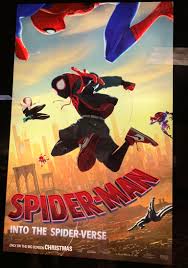
2018 was strong for animation. There was a lot of good content with Dreamworks (Captain Underpants), Pixar (Incredibles 2), Disney (Ralph Breaks the Internet) and anime (Mirai). But, for my buck, the most fun I had was with Spider-Man: Into the Spider-Verse. It sounds like I’m cheating to go with the movie everyone loved, especially one so “corporate”, but it really is that good! It’s easily the best Spider-Man movie, that’s for sure! I guess that’s what happens when the duo behind The LEGO Movie are project overseers, huh?

Where do I begin? Do I talk about the technical aspect, the blend of comic aesthetic and CGI animation, and how it looks amazing and unique? Do I bring up how the movie, by making Miles Morales relatable, updates the Spider-Man concept for the 21st Century? Do I mention how great the voice acting is, especially from Nicholas Cage? Do I compliment the blend of humour and drama? Or do I remind everyone how the movie has the best post-credits stinger ever?

All of that’s important, but stopping there does it a disservice. Not only is the movie technically impressive and fun, but it manages to be both while remaining relevant. Spider-Man: Into the Spider-Verse is about the universality of Spider-Man, as well as what makes it so appealing. There’ve been many Spider-People over various comic runs, and there’ll probably be many more to come. Because Spider-Man is the every hero, and this movie embraces that. If that’s not enough to win Best Animated Feature fair-and-square, then I don’t know what is.

2019
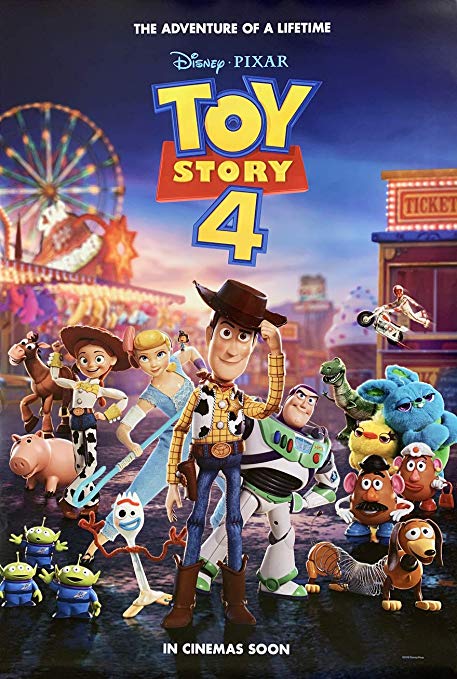
We’re ending this with another Pixar film, obviously. 2019 was a solid year for film, even if I don’t think it was as good as the previous year. The only surprise was that Toy Story 4, a movie in the works for way too long and mired with production struggles, managed to be good. And not only good, but great. And not only great, but arguably the second-best entry after Toy Story 3. Considering Pixar’s hit-or-miss output in the 2010’s, especially with sequels, that’s impressive. Never doubt the power of Woody and Buzz, I guess?

The biggest tick in its favour is how it made an unnecessary plot-point from the previous movie, the disappearance of Bo Peep, and turned it into its greatest asset. Bo was never the most-interesting character prior, but this movie somehow gave her an arc and likeable personality. She also opens up a whole can of worms that was never addressed prior: what do you do when you’re not wanted as a toy? Do you get chucked, or do you embrace your “lost toy” status?

The movie also questions what it means to be a toy through Forky, emphasizing that a child’s love is more important than what you’re made of. Even the film’s antagonist, who’s tied to this theme, feels like an interesting take on the “twist villain” trope Pixar usually does, making for something unique. But that’s Toy Story 4’s legacy: expanding the scope of what was possible, enough to actually get me to cry. Was it required? No, but I’m glad it exists. And I think the previous movies are enhanced because of it.

That about wraps it up for this reflection on the past decade’s animated films. Be sure to give each one a watch, and I’ll see you next time!

Wednesday, January 1, 2020

Star Wars Defined-A Funny Thing Happened on the Way to the Fandom...

“No one hates Star Wars more than Star Wars fans.” (Wise proverb.)


I’m late to this discussion. I had a 9-part retrospective series on my blog to wrap up, but I also wanted this to be as good as possible. Star Wars means a lot to many people, myself included. And I felt that the only way to accurately get my thoughts down for the Star Wars Defined series was to let the discourse die down. It’ll have been a few weeks anyway when this publishes, and most of the those interested will have seen the newest movie, so it made sense to wait.

I’ve said this before, but I didn’t grow up with the original trilogy. I was born in 1990, and the final film in that saga was already 7 years old. My official introduction to Star Wars was The Prequels, the first of which I saw at a friend’s birthday party in 1999. I remembered enjoying it, but hey! I was 9 years old. I enjoyed a lot of “garbage” as a kid.

But even as I got older, I never understood why The Prequels received such intense backlash. True, time hasn’t been kind to them. But they’re still films. They weren’t even the worst movies ever made, nor did they somehow “ruin Hollywood”. And even if they had, so what? We asked for more Star Wars, we have ourselves to blame.

This was also my first introduction to toxic fandom, in high school. I owned my first laptop, had official access to the internet and could see what people had to say for the first time. It’s true that the internet was vastly different in 2006, but some parts remained consistent with now. Key among them was how vitriolic and possessive people were about entertainment.

Star Wars backlash isn’t anything new. As HelloGreedo has pointed out, it can be traced back to 1980, when Star Wars Ep. V: The Empire Strikes Back debuted. We remember that movie fondly now, but almost 40 years of hindsight can do that. When it first came out, however, people were pissed. They found that it didn’t meet expectations, instead challenging them, and that its bittersweet ending made them uncomfortable. Even fan letters screamed “This isn’t what I wanted!”, showing that toxic fandom existed then.

Perhaps that’s why the next entry felt like a course correction. Whereas Star Wars Ep. V: The Empire Strikes Back was slow and drawn out, Star Wars Ep. VI: Return of the Jedi was quick and to the point. Whereas the former had heavy themes, the latter had light ones. And whereas the former ended on a downer, the latter ended on a happy one. It was no contest: the latter was more satisfying.

Except…not really. As people have pointed out in recent years, time hasn’t been as kind. Speaking personally, the movie’s first act was sloppy leftovers, while many of the character resolutions were rushed or underdeveloped. This was especially true with Emperor Palpatine, whose death, to this day, feels anticlimactic. It wasn’t a bad movie, it had some great moments involving Luke’s temptation to The Dark Side, but it never coalesced the way it could’ve. But fans were happy, so what do I know?

The real issue started when The Prequels pissed fans off. I won’t reiterate my own thoughts, it’d take too long, but I find it bizarre how offended people were. I remember one of my local papers, following the release of Star Wars Ep. II: Attack of the Clones, having kids write in to express their dissatisfaction. One of them compared Anakin’s line about sand to something barf-worthy. Okay…

The discourse turned around a bit come Star Wars Ep. III: Revenge of the Sith, but even then it was pretty vitriolic. If you frequent the film’s IMDB page, you’ll find that most reviews are either neutral, or downright vile. Some have claimed that George Lucas “raped their childhoods”, which is a little overdramatic. The fact that people get so worked up over what, to paraphrase Patrick Willems, amounts to a space opera about fantasy wizards for children concerns me. It makes me wonder if Star Wars fans got that memo.

Which leads to post-Disney acquisition, and the weird backlash that their output’s received. Whether it’s Star Wars: The Force Awakens being a “lazy rehash of nostalgia”, Star Wars: The Last Jedi “deviating in weird directions”, or the spin-offs feeling like “unnecessary Wikipedia entries”, Star Wars simply can’t win. Even Star Wars: The Rise of Skywalker, with its attempts at course overcorrection, can’t win. And while I won’t give any spoilers, in case some of you still haven’t seen it, I often wonder if we’re watching the same movies.

What do we expect from Star Wars, after all? It’s not Casablanca. It lacks the sophistication of The Godfather films. Even in terms of action spectacle, I can think of several franchises with better acting, writing and, possibly, special effects. Star Wars is pulpy, frequently schmaltzy, occasionally weird and sometimes lazy. It’s gone in both good and bad places over its almost 43 year run, often simultaneously. And that’s okay. You don’t have to like all of its choices, I don’t, but with the way that fans talk about it, you’d think it was trying to murder us!

And that’s not okay. That’s not healthy. It’s actually scary, especially since the franchise was meant for children. That’s not to say that it shouldn’t have standards, it should, but that doesn’t mean that going in a different direction than you’d hoped is a justifiable cause for bile. It’s not.

I’m also concerned what’ll happen when kids watching Star Wars now grow up and become adults. Will they be equally as vitriolic to newer films, demanding they live up to what Disney’s first wave had to offer? Will they be mad that Rey, who’s seen her share of struggle, will have her ideology challenged, like how Luke was challenged by Rey? And will the discourse over the films devolve into a series of “NO U”s again, with defenders and detractors refusing to acknowledge who the target demographic is? The thought of Gen Z fans becoming old coots over Star Wars, which is supposed to be for kids, makes me wonder if humanity really deserves this franchise.

*Sigh*

Perhaps I’m biased. I’ve enjoyed every Star Wars-related property to an extent, and that’s potentially clouded my judgement. But it also gives me a certain clarity to realize that I’m not really the franchise’s target demographic. And that’s okay. If little kids are being inspired by Star Wars, only to grow up and create their own art, then who am I to judge? What good do I accomplish by claiming that Star Wars has to be for me and me alone?

I guess my concern is that we’ve forgotten why we loved Star Wars. And not only toxic fans, but even some of the more critical ones. Star Wars isn’t solely about subverting expectations, or tickling the nostalgic funny-bone. It isn’t only about challenging you, or pleasing you. It’s about the struggles between good and evil, set to a sci-fi backdrop, and culminating in a soap opera story about space wizards. And Star Wars fans need that reminder a little more often.

Tuesday, December 31, 2019

Studio Ghibli Retrospective 9

Part 1 Part 2 Part 3 Part 4 Part 5 Part 6 Part 7 Part 8

XXV. Epilogue/Conclusion

When I wrote my Studio Ghibli retrospective the first time, way back in 2013, I was in a much different place than now. For one, I was still writing for ScrewAttack, which is now defunct. And two, I hadn’t fully-grasped how to tackle these movies in a long format. Since then, not only has the company released more films, but, judging by recent news, it’s possible they might have more on the way. Hayao Miyazaki has announced another film in time for the Tokyo Olympics, while Goro Miyazaki has a project scheduled shortly after that. It’s exciting, but it means that this retrospective will be dated, yet again, in a few years.

I’m not upset, though. It’s important to seize your moment when it arrives. Does it suck that I might have to do this again? Maybe. But for now, I’d rather not focus on that.

And what a task this was! When I initially decided that December of 2019 would be dedicated to Studio Ghibli’s work, I didn’t realize how big an undertaking that was. Between re-watching 8 of their movies, making sure I had a working memory of the remaining 15, choosing the appropriate angle, actually writing it, making adjustments to my schedule and then editing, formatting and slotting in these blog posts, it felt like my work was cut out for me! It was the most intense retrospective I’ve ever written, and at times it was even gruelling to finish! It also didn’t help that I’ve struggled with projects like this before, so the pressure was on.

Fortunately, I was committed and dedicated. Unlike, say, my Digimon retrospective on Infinite Rainy Day, which is still unfinished, I was absolutely sure I could do this. I was gonna make sure. And if it didn’t pan out? Well…I wouldn’t even contemplate that.

Sufficed to say, I actually did finish writing, editing, formatting and scheduling this, so good on me!

Back to Studio Ghibli, the reason why this spoke to me is because it had a certain appeal that few animation studios can replicate. Maybe Disney, possibly Pixar too. But not much else. And that works in its favour when a Japanese animation house, one with entirely different origins and objectives than the biggest conglomerate, can still evoke that “Disney magic” in people of all ages. I know it can for me.

I’d go one step further on that, saying that I like Studio Ghibli more than most of Disney’s output. There are two reasons for that: the first is that Studio Ghibli takes more creative risks than Disney. Because of the image that they’ve crafted for themselves, Disney often feels scared to try and be adult. They’ve done it occasionally, mostly through Touchstone Pictures, but even then their output feels less like them and more like any other film house.

Studio Ghibli doesn’t have that problem. They can make a Ponyo one day, which appeals most to Disney’s target audience, then turn around and give us a Princess Mononoke another, which wouldn’t appeal to them at all. It’s that level of creative flexibility that makes me admire them, as it shows that they can cater to everyone. That most of their library’s pretty consistent on a quality level doesn’t hurt.

The other element working in Studio Ghibli’s favour is that they don’t feel corporate. This was true in 2013 when I first wrote this, but it’s especially true in light of Disney’s practices in the 6 years since. Disney might put out good content on occasion, but it always feels cynically motivated. It always feels like they want control, even purchasing smaller properties and milking them dry. I end up feeling conflicted as a result.

Studio Ghibli lacks this problem, at least superficially. I’m sure they still care about money, and they’ve exercised some frustrating corporate decisions too, but their work doesn’t feel cynical. When I watch even their weakest movie, Tales From Earthsea, I feel like it was made with the best of intentions. It still feels genuine.

And now, with the closing part of this series, I’d like to give each of the 23 films I’ve discussed a score:

The Castle of Cagliostro-4/5.

Nausicaä of the Valley of the Wind-4.5/5.

Castle in the Sky-5/5.

Grave of the Fireflies-4/5.

My Neighbor Totoro-4/5.

Kiki’s Delivery Service-4.5/5.

Only Yesterday-3.5/5.

Porco Rosso-3.5/5.

Ocean Waves-3/5.

Pom Poko-3/5.

Whisper of the Heart-4.5/5.

Princess Mononoke-5/5.

My Neighbors the Yamadas-2.5/5.

Spirited Away-5/5.

The Cat Returns-3/5.

Howl’s Moving Castle-3.5/5.

Tales From Earthsea-1.5/5.

Ponyo-4/5.

The Secret World of Arrietty-4/5.

From Up On Poppy Hill-3.5/5.

The Wind Rises-3.5/5.

The Tale of the Princess Kaguya-4.5/5.

When Marnie Was There-4.5/5.


Keep in mind that these are personal ratings. Either way, thanks for sticking it out, and I’ll see you all next time!

Sunday, December 29, 2019

Studio Ghibli Retrospective 8

Part 1 Part 2 Part 3 Part 4 Part 5 Part 6 Part 7

XXII. The Wind Rises

This is, without a doubt, Hayao Miyazaki’s most-unusual project. He’s dabbled in realism, and even period pieces, but a biopic? And one on the Japanese godfather of modern fighter planes? In animation? That’s new.

So how does it fare? It’s…interesting. Like Miyazaki’s lesser works, it wouldn’t call it great, but it definitely has moments of inspiration. But while it’s not a bore, it does feel like a run-of-the-mill biopic. Take that as you will.

Interestingly, the film’s primary focus, the airplanes, that are the least-interesting part. I could potentially be biased, I wasn’t big on Porco Rosso’s aviation either, but hearing the technical lingo doesn’t strike me as exciting. It’s dry, incredibly-complicated and keeps going in one ear and out the other. Maybe someone who likes this stuff will get more enjoyment out of it.

The film’s romance subplot, involving Jiro and the ill-fated Nahoko, fares much better. But it’s cheesy, and it feels straight from a Golden Age Hollywood romance epic. Ironically, that cheesy romance is the most-interesting part. I guess it’s because it actually moves the film forward, instead of making it feel plodding or exposition-heavy.

A lot of the side-characters also feel pushed aside because Miyazaki didn’t know what to do with them. Either that, or he didn’t care. The biggest casualty is Kayo, Jiro’s sister. She’s only in a handful of scenes, and the majority are spent with her berating Jiro for being “so insensitive”. I’m sorry to say this, but she’s actually pretty annoying.

The movie does have other strengths, however. The incorporation of historical elements, like the great earthquake of the 1920’s, are shown on full-force, and you feel their weight. Joe Hisaishi’s score is as good as ever, even if he overuses many of the same tracks. The animation, even for a Miyazaki movie, is dynamic, driving home some of the more exposition-heavy moments. Even the background noise is unique and interesting, being composed of acapella sounds instead of conventional noise. There’s a lot of good to be had here.

Which is a shame that I’m not as invested as I should be. And I don’t think it’s because it’s a biopic, because I love biopics. I think it’s because Miyazaki’s not as in-tune with non-fiction as with fantasy. Honestly, the moments where it deviates into fantasy, be it Jiro’s romance or the dream sequences with Caproni, are when it’s at its best.

Still, it’s worth a watch. Or two. Or perhaps three or four. The Wind Rises definitely has a lot going for it, and I like its running motif about wind. I only wish I loved it more, and that its loss to Frozen at The Oscars didn’t feel like it overshadowed the movie’s quality. But that’s me.

XXIII. The Tale of the Princess Kaguya

A film 8 years in the making, this is, in my opinion, Isao Takahata’s magnum opus. It’s weird saying that, seeing as everyone usually points to Grave of the Fireflies when discussing Takahata’s best work. But I can’t lie: despite being the longest Studio Ghibli movie, clocking at 137-minutes, it really feels like everything the director’s career was leading up to. I don’t even mind that it occasionally drags.

The most-striking part about it is its animation style. Building on what My Neighbors the Yamadas started, The Tale of the Princess Kaguya goes for an otherworldly, fantasy-style approach. At times, it even drops fluidity and goes full-out sketchy, like when Kaguya storms out of the royal courtyard. It’s a stylistic choice that’s confused some and annoyed others, but I love it!

I also love how the movie deconstructs the traditional princess archetype that Disney films revel in, even though it’s not a Disney movie. Kaguya has no interest in being royalty, she simply wants to live her days with her childhood friends. She’s forced into a life without her consent, and she rebels by playing to vapid nature of her suitors. Seeing them fail is, arguably, the best part.

Yet despite the funniness of it all, The Tale of the Princess Kaguya’s a somber and depressing movie. Like Grave of the Fireflies, this is a film about the youth of Japan. But unlike Grave of the Fireflies, it doesn’t feel like it’s talking down to them. The movie’s about the dangers of the Japanese education system and how it negatively impacts children, and it shows through Kaguya’s struggles.

The movie’s also really sad, especially in the last-third. Whether it’s Kaguya struggling with depression, Kaguya fighting suicidal thoughts, or even the heartbreaking ending, the movie never fails to get me to cry. It’s especially tear-jerking because you feel for Kaguya and her parents. You understand her struggle, but you also get why her folks, her father in particular, act the way they do: they want what’s best. I’m sure anyone who’s a parent can understand.

The movie’s also beautifully-scored. It’s Joe Hisaishi once more, but his orchestrations feel more traditionally Japanese in style. There are plenty of tracks that are as somber as they are quiet and bitter, and they set the mood. Not since Okami have I listened to a score so distinctly Japanese. It’s great.

The Tale of the Princess Kaguya’s an example of what Studio Ghibli can do at their best. It drags occasionally, and it feels overly sappy in others, but when it works, which is 90% of the time, it really works. It’s so good that, unlike The Wind Rises and Frozen, I actually am disappointed that it lost at The Oscars to Big Hero 6. It feels like the more artistic and ambitious movie.

Also, its use of nursery rhymes is the cherry on top.

XXIV. When Marnie Was There

The most-recent movie from Studio Ghibli, and Hiromasa Yonebayashi’s second, this sums up Studio Ghibli’s legacy. It’s quiet, it’s atmospheric, and it’s contemplative. At times, it even feels like a campfire ghost story, except with a sad conclusion. Take that as you will.

I know a lot of people have issues with the movie’s rug-pull reveal, but it doesn’t bother me in hindsight. For one, Marnie’s always been a mysterious character. And two, Anna’s that desperate for companionship. The movie even plays on the “is she real, or is she not?” motif , so when you finally get the answer it doesn’t feel cheap.

Speaking of, I really like Anna and Marnie’s relationship. The two clearly understand their respective traumas, and in some ways they even envy one-another. Yet they never patronize their respective experiences, instead developing a friendship that transcends time and space. It’s a weird bond, but it works.

What also works is this movie’s use of perspective. Like The Secret World of Arrietty, this is a film about two people, one of whom is sick. But whereas Sho suffered from a heart defect, Anna has asthma and depression. She doubts her ability to cope routinely, and only by opening up about her past can she learn to heal. Though not before getting into confrontations with other people, I suppose.

I like this movie’s atmosphere. It feels like it could’ve been a story by Edgar Allan Poe. It definitely has the trappings of one-a disturbed protagonist, a spooky relationship, a fleeting feeling, an ominous setting-so it’s not like it couldn’t have…save for one detail: it’s meant to make you cry, not feel uncomfortable. This is Studio Ghibli, who at this point was worrying about its future, doubting its own legacy, and perhaps gaslighting its greatness. It’s a sad and humbling look on how its views its place in film history.

When Marnie Was There’s a fitting close to a long road of classic after classic. It wasn’t a box-office success, and the studio would go through restructuring after its release, but I think it’s worth a watch. I actually implore people to check it out, even if only to say they don’t like it. Or to say they listened to Priscilla Ahn sing “Fine On the Outside” during the credits. Whichever comes first, I won’t judge.

(To be concluded.)

Wednesday, December 25, 2019

Studio Ghibli Retrospective 7

Part 1 Part 2 Part 3 Part 4 Part 5 Part 6

XIX. Ponyo

You’re never gonna find a cuter movie under the Studio Ghibli mantle. Everything from the protagonists being little kids, to the animation looking straight out of a children’s storybook, to even the premise being loosely-based on a Hans Christian Anderson story, Ponyo screams “cute”. It screams it from the top of its lungs, over a gigantic cliff-side, in its high-pitched voice, until it gets blue in the face and falls asleep. Bless it for that!

When I first saw this movie in Blockbuster, I was worried it might be too childish. Plus, I’d recently come off of Howl’s Moving Castle, so I approached it with trepidation. Fortunately, the movie lives up to that Hayao Miyazaki spark. It’s not his best, but I can’t think of a better movie that’s so unapologetically childish. I mean that in a good way.

The most-obvious reason why this movie works is the leads. Sosuke’s your precocious 5 year-old, wanting to live up to his father’s legacy while having the wide-eyed innocence of a pre-schooler. He’s brave, reserved, but caring and emotional when necessary. Even when he thinks of others, which he does a lot, it’s coming from a child’s point of view. He’s the audience point-of-view.

Ponyo, while having that same innocence, is a nice foil to Sosuke. Being a fish transformed into a little girl, she’s yet to experience the tribulations that come with that. So she’s in wonderment of everything, and it’s infectious. Be it jumping for joy over fixing the generator, greedily gulping down her cup of honey-ginger milk, or excitedly exploring the rising ocean in search for Lisa, you can’t help but smile. I’ve heard from some people that she’s annoying, but what were they expecting?

Ponyo’s weirdness is off-putting to some, too. Detractors have called its story shallow, its characters uninteresting and its twists and turns jarring. I’ve even heard complaints that the movie’s boring. Ignoring how much of the complaining could easily apply to Howl’s Moving Castle, Ponyo not caring if people don’t like it probably explains why I like it. It has nothing to prove, and it’s a Hayao Miyazaki movie. Not only is weird the director’s modus operandi, but he’s earned the right to make a divisive movie.

If there’s one area that people are universally in agreement over, it’s the Joe Hisaishi arrangements. Going for a more operatic approach, akin to Wagner, the music feels lifted out of a German epic. There’s even a callback to The Ride of the Valkyries when Ponyo rides the typhoon-sized waves. It’s delightful to listen to.

There’s really not much to say beyond that. Ponyo herself is cute. Her energy is cute. Her relationship with Sosuke is cute. The animation style is cute. And the music, grand as it is, is doubly-cute. It’s simply cute, even if it ends on a bizarre final shot.

XX. The Secret World of Arrietty

The directorial debut of Hiromasa Yonebayashi, The Secret World of Arrietty’s the first Studio Ghibli movie I saw in theatres. My attachment to it, therefore, feels incredibly personal, perhaps to the detriment of being objective. Still, I’ll try. And ignoring any nostalgic biases, the movie’s actually really charming.

I think The Secret World of Arrietty works because of how it plays with scale and size. Arrietty’s no bigger than a male adult’s hand, and the film never lets you forget that: whether it’s climbing a table leg or opening a ventilation shaft, objects that we take for granted can be hazards for her and her family. The movie constantly plays this up for suspense and excitement. Even the “heist” early-on, where Arrietty and her father “borrow” some items from the kitchen, feels straight out of an old-school spy show on TV. It’s great!

That’s not to take away from the human element, which is where Yonebayashi always excels. Sho, the point-of-view human, is a sickly boy with an unnamed heart condition. Every breath is precious, and he knows this. Conversely, due to his condition, he treats all life as equally precious. He’s the kind of kid who wouldn’t hurt a fly if it bit him on the neck. So while his discovery of Arrietty and her family is nerve-wracking, it’s not him they have to watch out for: it’s everyone else.

And the movie follows through on that with Haru. You never once doubt that she’s gonna be trouble, and Sho constantly outwitting her to save Arrietty makes for some tense moments. Even the climactic rescue’s pretty nail-biting. I’m definitely on edge each time I watch it!

I also like how the movie has consequences. Sho and Arrietty might have a mutual respect for one another by the end, but it’s made clear that their friendship is doomed. The two are from different worlds, and they can’t be together. It’s like Arrietty’s father says, “the humans’ curiosity can never be stopped”.

I also really like Cécile Corbel’s score. Initially, it’s a bit jarring to hear her harp over tense moments, or hear her calming voice over serious ones, but it creates an otherworldly feel. Corbel, a big fan of Studio Ghibli, put lots of care into making sure that every track fit, and you can tell. She knows when to draw you in and when to hold back, even if it’s jarring initially, and nothing feels wasted. She even sings the film’s theme song in the credits, which is calming to listen to. Forget tea, I’ll take Corbel’s voice any day of the week!

If Ponyo’s big draw is that it’s unashamedly cute, then The Secret World of Arrietty’s is that it’s relaxing. Even in moments of heightened suspense and tension, you never feel overwhelmed. Which is good, because the movie’s also pretty basic story-wise. That, and it’s cool to see the ordinary be animated as this big adventure. I wish more movies would do that.

XXI. From Up On Poppy Hill

Goro Miyazaki’s sophomore attempt, the difference between this and Tales From Earthsea is striking. How did the guy who directed Studio Ghibli’s biggest mistake manage to make one of their more unusually-charming films? Perhaps part of it falls on experience, and part of it on being comfortable with the subject matter. But a big chunk is most-likely due to everyone having more faith in him. It’s like they always say: if at first you don’t succeed…

There’s a lot going for this movie, and a lot more that could’ve been. In terms of the former, the film feels like straight out of the most-cliché, cookie-cutter handbook: girl meets boy. Girl falls in love with boy. Girl and boy discover The Westermarck Effect. Girl and boy realize they can’t date, but still love each other. And while I won’t ruin the ending, it too feels generic. And yet it works. It works because the characters are likeable and really well-written in spite of that.

Of course, plot B is more compelling than plot A, as it takes more centre-focus. The old clubhouse from the Latin Quartier has so much character and time invested that you actually grow attached to it. You care because the characters care, and you don’t want it to be demolished. Even before it gets renovated, it still has so much life that, like Howl’s Castle, it’s easily the most-interesting part.

Being a movie focusing around nostalgia, the movie pays frequent tribute to Cinemascope musicals. There are several songs throughout, and the soundtrack feels like ripped from a 60’s Broadway show. And they’re all good songs, with most being toe-tappers. I think my favourite is “Sakiyuki”, sung by the late-Kyu Sakamoto. It not only fits its scene, but, to paraphrase Umi, “it’s nice”.

The movie’s also hilarious, arguably the funniest Goro’s worked on. There are several moments where I genuinely burst into laughter, and most were because of the script. I think the best joke is in the politician’s office. Anyone who’s ever had to play the waiting game can relate, and it keeps building on the same joke. Of course, the casual delivery of other lines in the movie helps with the chuckles.

From Up On Poppy Hill’s a nice, quaint movie about a nice, quaint period in history. Like My Neighbor Totoro and Only Yesterday, it has a tendency to “Okay Boomer” a lot, but it doesn’t matter. The film celebrates the power of youth, feeling more like a Millennial power story. And it’s one where everything works for the better. We need more of those.

(To be continued.)

Saturday, December 21, 2019

Studio Ghibli Retrospective 6

Part 1 Part 2 Part 3 Part 4 Part 5

XVI. The Cat Returns

I’m tempted to call this movie“Alice in Wonderland meets Cats” and be done with it, I really am. But I don’t think that description does it justice. For one, it’s not both of those. And two, it feels more like The Princess Bride than anything, especially in tone. Still, it’s not an “amazing film”, so who am I to dwell on comparisons?

The film’s a weird, wacky adventure story about an insecure girl who visits a weird and wacky kingdom over a misunderstanding. Or perhaps it’s not so simple? Between the cat-related gifts that Haru receives, or being kidnaped and taken to The Cat Kingdom, I guess it might be more serious. I’m still debating that one.

How’s the film? Fine, I guess. Like Ocean Waves, this was a first-time project from a director who’d never work on a Studio Ghibli project again. Also, like Ocean Waves, the movie’s blissfully short. It barely clocks in at 75-minutes, making it harmless and easy to sit through. Yet, like Ocean Waves, its short length feels like a mask for pacing problems, even if it’s technically superior.

I think my biggest issue is that we have about 35 minutes spent in The Cat Kingdom, a place filled with intrigue and one that deserves much more time in. The rest of the movie focuses on the real-world drama of Haru following her daring rescue, and it’s as contrived and silly as possible. Even Haru acknowledges how dumb it is, so why should I care? What good is it to invest my time in these hijinks?

That’s pretty much the movie in general: Haru’s getting cat-themed gifts, even though she’s a human! Isn’t that silly? Now she’s being kidnapped by sentient cats! Isn’t that silly? Now she’s turning into a cat? Isn’t that-you get the point.

Even The Cat King, who’s delightfully hammy, feels wasted. He’s built up as a stuck-up, playful lecher who only wants what’s best for himself. He throws entertainers out of his castle window because they’re “not entertaining enough”. He even hits on Haru. This slime-ball of a character should be a gem! So why’s he wasted in such a disappointing manner? The only reason I can think of is “time”.

The movie also isn’t subtle. As in, it spells out its message right up front and to Haru: always believe in yourself. Inspiring! But while this remains the underlying theme, and shows up routinely, it never feels like anything more than fortune cookie-level. And that cheapens what could’ve been a much grander narrative.

I’m being too hard on The Cat Returns. For such a minimalist project, it looks and sounds great. The characters are surprisingly detailed, and the music contains a great waltz that occasionally pops into my head without warning. I also like the part where Haru walks on birds. More of that, please!

The movie’s also really funny. I keep finding myself laughing at how absurd parts are, even during the “isn’t that silly?” moments. I simply wish that the story was more on-point with the comedy, or that it was longer. Because while Ocean Waves being short was a blessing in disguise, The Cat Returns being short works to its detriment. And that saddens me, as I like the premise. Still, I know this movie’s popular amongst younger Studio Ghibli fans, so…

XVII. Howl’s Moving Castle

I hated this movie initially. I found it confusing, I thought its characters were dull, and that it dragged on aimlessly for too long. And that worried me, because it’s a Hayao Miyazaki movie. Still, I persisted. And while I don’t exactly love it, even after several re-watches, I can at least respect it. I guess that’s character development?

Getting the obvious problems out of the way, the story’s a mess. Miyazaki’s not one for excellent writing, since he always writes his films as he goes, but his other works have some level of consistently. At least they flow like actual movies. Howl’s Moving Castle feels like it’s making itself up as it goes, a classic case of “the tail leading the dog”. Fitting, seeing as how the movie was originally meant as a Mamoru Hosoda project, with Miyazaki coming on later.

The Witch of the Waste also bugs me. Initially, she’s the primary antagonist. By the halfway point, however, the movie shifts gears, and she’s reduced to a pile of mush with an inconsistent bout of dementia. It’s like Miyazaki didn’t know what to do with her, so he relegated her to the sidelines while focusing on Sophie and Howl’s relationship.

Sophie doesn’t fare much better. Beginning as a bore, she’s cursed by The Witch of the Waste. This isn’t terrible, she’s a lot more fun old, but her curse is inconsistent. Even with the subtle implications that it’s tied to her self-esteem, it flip-flops and never settles on any solid rules. Even in the second-half, when Sophie starts gaining confidence, her age fluctuates rapidly. It eventually settles on a midway point for…reasons, but even then it’s confusing. Why keep Sophie young, yet still make her hair grey?

There are also little details about the messaging that bug me to no end. The theme about war, which this movie portrays as non-discriminatory, feels like a side-plot with no reason for existing. It even ends with an incredibly-anticlimactic resolution, one that raises more questions than answers. I get that this was supposed to be a commentary on The Iraq War, something Miyazaki’s confirmed, but it’s so messy and immature about it.

That’s not to say it’s all bad. Like every Miyazaki film, the animation’s gorgeous, with Howl’s Castle being the centrepiece. The score, by Joe Hisaishi, is some of the composer’s best, with The Merry Go Round of Life being my favourite piece from the studio. I also like most of the characters, including Howl and Sophie. And I buy into their romance, which has an excellent pay-off.

This is my biggest frustration with the movie: there’s a lot of great here, but also a lot of bad. And they feel at odds, such that it makes for complicated viewings. My concerns also haven’t abated since I first saw it-if anything, they’ve gotten worse! But I’ve also come to appreciate this gonzo production, so I guess that’s something!

XVIII. Tales From Earthsea

So remember how I said there were two Studio Ghibli movies that were actively not good? This is the second. And it’s even worse than My Neighbors the Yamadas. At least that movie, for all its meandering and overkill, holds together. Tales From Earthsea is a literal train-wreck from the moment it says go. And it stays that way until the end.

I feel awful for Goro Miyazaki. He had a large legacy to live up to, and he could never do it. While this movie’s a huge mess, and let’s not undersell that, I still think he didn’t deserve to be saddled with making it. It’s kinda unfair to him.

The problems with this movie are obvious from the start: the animation’s generic, even if it looks detailed. The plotting’s even more bonkers than Howl’s Moving Castle, committing the cardinal sins of too much exposition and not enough flow. Cobb teeters between being too dull a villain to be interesting and too over-the-top to take seriously. The movie promises adventures it never shows. And Arren’s the most uninteresting Studio Ghibli protagonist ever, even though he’s supposed to represent depression.

But the biggest sin is that it’s boring. For a high-fantasy premise, not a lot of excitement happens for most of it. There could’ve been potential for so much more, but it’s not utilized; in fact, if it weren’t for the movie’s score, I’d probably not even know how to react to half of the scenes. That’s a big problem!

Does it have any saving graces? Aside from the music, that is? Well, Therru’s vocal solo halfway is pretty good. It may drag on, but it feels heartfelt enough. Still, that doesn’t compensate for such a dry, boring movie with such dry, boring characters. It hurts to say this, but Goro earned his Japanese Razzie. It hurts because, like I said, I think he deserved better.

(To be continued.)

Tuesday, December 17, 2019

Studio Ghibli Retrospective 5

Part 1 Part 2 Part 3 Part 4

XIII. Princess Mononoke

Princess Mononoke’s a legitimate war movie. And one centred on something close to Hayao Miyazaki’s heart, too: the environment. It’d seem like this’d be an excuse to preach about the current disarray mankind has thrown the world into, but it actually shows lots of restraint. Even amidst the film’s lack of subtlety, which was never that important anyway, there’s quite a bit of depth. It has a lot of nuance and layers.

Arguably, the best praise I can give is that it doesn’t paint either side of the conflict, humans and animals-alike, as one-dimensional. They’re equal parts compassionate and destructive, in different ways. The humans can be destructive and apathetic to nature, as evidenced through Lady Eboshi, but kind and caring to their own, as also evidenced through Lady Eboshi. Subsequently, the animals of the forest, majestic and graceful, also have their impulsive, vicious sides. Amidst their constant back-and-forth, you see and understand both sides.

The one constant is Prince Ashitaka, the outsider and audience POV. You’re meant to sympathize with him. He’s the one whose life was influenced negatively by the conflict. He’s also the one who keeps making grand speeches about wanting everyone to get along. It can feel a little self-righteous at times, but it works. Plus, he’s awesome in combat.

The film conflicts the viewer constantly: who do we root for? The humans? The animals? Both? Neither? We’re meant to be uncertain.

That’s not to say that the film doesn’t present clear lines. Ultimately, nature wins. The fighting is bad for everyone involved, yet it’s inevitable. And it’s cyclical, with it happening whenever expansion on either side becomes necessary. That honesty’s welcomed in a world where environmental movies lack it.

Everything’s also complimented by the aesthetic, which uses hints of CGI for select shots, and the music, which is my favourite from Joe Hisaishi. Yet even amidst the grandness, there’s something small about the ordeal. It never loses sight of the intricacy of the premise, despite its violence and bloodshed. That’s something to be admired and respected.

I’ve made no secret that I have issues with the movie, even if none of them hold it back: for one, the plot takes a while to set up. The second-half’s also significantly better than the first-half. Many of the side-characters blur together into a collective voice. And while one of its antagonists gets their comeuppance, the other doesn’t. None of these are deal breakers, though.

For what it’s worth, this is a brilliant film. It’s layered, introspective and dense. This is the kind of movie you show to film students who are interested in environmentalism. It’s also the kind of movie you show general audiences looking to have their brains picked. I wouldn’t call it my favourite Miyazaki movie, but it’s pretty high up there. And at almost 134-minutes, it’s epic, too!

XIV. My Neighbors the Yamadas

I always feel hesitant saying this, but this is one two Studio Ghibli movies that I don’t like. The reason’s simple: it’s not a movie. It’s a series of skits loosely connected by Haikus, and ones that have next-to-nothing to do with one-another. It’s also way too long for its own good. It may be pretty, and it’s occasionally funny, but I keep wondering what the point is. Maybe that’s on me though, I don’t know.

To be fair, the movie’s not the worst. It’s not even Studio Ghibli’s worst movie. Yet while I don’t loathe it, I keep failing to understand why the Japanese-equivalent of a “Best of” collection received the feature-length treatment. Even as a slice-of-life comedy, it’s not interesting enough to warrant more than 40 minutes. And that’s being quite generous.

Perhaps I’m being unfair. The movie, if you can call it that, plays to the mundaneness of everyday life, particularly in the family unit: struggling with your grades in school? Cue your mother yelling at you to “study harder” repeatedly. Your girlfriend’s on the phone? Chances are your family’s listening in. Even sibling rivalry and family squabbles are represented here.

I understand a lot of this in theory: it’s an ode to family life. It’s supposed to be episodic, silly and without depth! But if that’s the case, then why not make this a series of shorts? Why not keep this as a 4-Koma Manga, which suits it? There are only so many ways to draw out a punchline before it gets boring!

Fortunately, the movie looks pretty. Its designs are sketchy and cartoony, perhaps to emulate the newspaper funnies aesthetic, and it’s well-scored. It also gets me to laugh a lot, which I assume is a positive. And it ends on a sweet note, which is nice. But, again, I can’t justify this movie’s existence. Not even explaining its premise sounds interesting, which is disappointing.

Oh, and did I mention that it drags?

XV. Spirited Away

This was the first Studio Ghibli movie I ever watched. It’s also my favourite. I was surprised to find out that that wasn’t an original sentiment, but I can’t hide it. This really is fantastic, is it’s as relevant to a pre-teen girl as to an older man. It also won an Oscar, which never happens with an anime film.

The best part about this movie is Chihiro, the protagonist. She’s so great because there’s nothing really special about her: she’s whiney. She’s insecure. She’s easily afraid. She lacks self-confidence. These are all parts of her character that she has to confront, and she does. I like that because most of Hayao Miyazaki’s protagonists have something special or enhanced about them. Be it a magic pendant, a broom, or a curse, that seems to be his modus operandi. Spirited Away’s about a normal, 10 year-old trying to save her parents from being eaten. That’s it.

And it works. Because Chihiro, by being herself, influences everyone around her. Even the grumpy Yubaba, who’s implied to be the antagonist, is softened by her, to the point of becoming nothing more than a miserable old grump. I guess that’s more-relatable than some grandiose adventure, huh?

The movie also has some really memorable moments. Scenes like The Stink Spirit being cleaned come to mind, for one. It’s Miyazaki rearing his environmentalist head again, but it works! You feel the creature’s pain, and you desperately want it to have a bath and be purified. And when it’s revealed to have been trapped in toxic sludge, it’s really satisfying!

There’s also that somber, really quiet train ride in the third-act. That scene’s been deconstructed to death, but I’d be lying if I denied its power. I wish more films would have quiet moments like that one, underscored by a composer like Joe Hisaishi. I firmly believe animation would be taken more seriously by adults.

Spirited Away’s a special film. It takes an Alice in Wonderland-esque premise, which I should despise, and makes it appealing. It’s funny, it’s sad, and it’s uplifting. It tackles themes of greed, corruption and the importance of self-sacrifice and love. It might not be the shortest of animated films, it’s over 2 hours, but that doesn’t matter. I strongly think more films, particularly animated ones, should strive to be as challenging as this. You can quote me on that.

(To be continued.)

Popular Posts (Monthly)

Popular Posts (General)