Thursday, May 13, 2021

My Top 15 Favourite Moments in WandaVision

I’ve made it no secret that I enjoyed WandaVision. It not only captures the essence of grieving, but it does it in an interesting way. Sure, not all of it’s perfect, but neither is The MCU. So it’s only fair to discuss it in an appropriate way: with a Top 15 list. Let’s do that.


(By the way, spoilers. If you haven’t seen it, I recommend watching WandaVision.)

15. Wanda searches for her kids

Beginning with a small bang, I chose a post-credits scene. While WandaVision has a few, the final one drives home what makes The MCU great: creating more questions while simultaneously answering a few. It’s worked for the franchise since 2008, and I don’t see it stopping. And why wouldn’t it? It’s effective teasing!

The scene begins with Wanda in a shack prepping tea or coffee (I’m not sure which). As she heads inside and walks over to the kettle, we’re greeted to another Wanda, dressed in her Scarlet Witch attire, flipping through a magic book. We wonder who the real Wanda is, what she’s doing and why. And judging by her sons calling for help, it’s safe to say that Billy and Tommy are alive. Fancy that.

I know this technically ruins the resolution of the final episode, since Wanda’s arc was learning to let go, but this is intriguing. On one hand, we have questions about Wanda’s presence of mind, as well as how her twins are alive. On the other hand, we know she’ll rescue them. It’s a cheap way to establish her teaming with Doctor Strange, but it’s still a cool moment that keeps everyone hooked. Also, Wanda looks dashing in her costume!

14. “Stop it!”

The first two episodes of WandaVision (and much of the third) aren’t anything special, hence why most of the moments won’t be from them. That’s not to say I don’t enjoy them, but their more traditional nature makes the show’s first third a little weak. Nevertheless, they have their moments, as well as occasional chuckles. They also have instances where the seeds of creepiness are planted, and this is apparent in Episode 1’s dinner scene. More-specifically, the climax of it, where Vision’s “boss” nearly chokes to death.

It begins innocently enough: after getting passive-aggressively grilled by the boss’s wife on Wanda and Vision’s marriage, a typical 50’s sitcom trope, Vision’s boss begins chocking on a hash brown. As his wife chides him to “stop it”, we know he’s not acting. Even the audience laughter stops, and the camera zooms in. All the while, the boss’s wife’s chiding turns into a subtle cry for help, which gets creepier when you realize Wanda has the final say. It’s tense and uncomfortable, even if Vision eventually saves him.

I especially like this moment for two reasons: first, as I said, it’s uncomfortable. Considering that Wanda’s made a sitcom bubble where all of Westview are her puppets, that the bubble is already bursting so early on, even if for only one moment, causes contemplation and introspection on the ethics of it all. And two, it’s not funny seeing a man nearly choke to death on food. I know he and his wife were badgering Vision and Wanda about children, but almost-murder’s not a trade-off. It makes the situation that much more alarming.

13. Wanda announces her pregnancy/“No!”

Building off of what I said about Episode 1, Episode 2 is also relatively-uninteresting. It has more narrative depth, at least by sitcom standards, but the “drunken talent show” shtick, while humorous, goes on for way too long. Additionally, the fake-outs of “Will Westview discover their secret or not?” don’t hit the bullseyes you’d expect, even if they’re on-the-nose. Still, there are two moments that make it worth your time. The first is when Wanda hears a weird voice on the radio, and for a split second the illusion is broken. The second comes at the end, as it keys you in that something is off.

Like the last entry, it begins innocently: after reminiscing on their talent show, Wanda and Vision realize they’re about to be parents. Before they can celebrate, a mysterious noise from outside interrupts them. As they investigate, they see a beekeeper emerge from the sewers. He turns to them, specifically Wanda, and we suspect that she’s hiding something. We never find out what that is, however, because she immediately utters “no” and rewinds time.

When I first saw this, I baffled and confused. I knew a little about the comics this was based on, but I didn’t expect Wanda to have this much agency. Seeing her rewind time was actually frightening. Not even the decision to turn the sitcom reality technicolour could make up for it. I see you, Wanda! You aren’t fooling me!

12. Darcy’s reintroduction

I have to be honest: I didn’t like Darcy in the Thor movies. Nothing against Kat Dennings as an actress, but she was always an unfunny snide-mouth. She also ate into the movies’ quality with her presence, such that I was waiting for her to either die, or leave. So when I watched Episode 4 and realized she was going to be in it, I dreaded the worst. Little did I know that the writers were aware, hence rectifying the problem. Darcy’s still a snide-mouth, but at least she’s useful now? And funny? If her reintroduction’s indication, I’d say so!

What makes her work is actually-competent writers sculpting her dialogue. When she’s introduced in the back of a truck, she asks intelligent questions about the other specialists. And when she doesn’t care for one of them showing attitude, she snipes him with a clever retort. Not to mention, her witticisms are actually funny. Seriously, listen to them yourself!

But what drives Darcy’s reinvented character home is that she’s actually useful. She does stuff! Relevant stuff! Of her own free-will! And she isn’t afraid to show up her male colleagues! I don’t know where this Darcy came from, but more please!

11. Hayward’s men turn on him

Right from his introduction, it was pretty clear that Kevin Hayward sucked. Whether it was his explanation of how Wanda created The Hex, or how he treated Wanda as a weapon, that Agent Wu, a mild-mannered individual, struggled to not speak ill of him spoke volumes. That Darcy had a perfect swipe for him strengthened that. So it wasn’t surprising that his most-satisfying comeuppance, aside from his actual comeuppance, came when Wanda threatened him. It was the only time she exited The Hex to do it, too.

Basically, Wanda witnesses Hayward’s drone hovering above her and her sons. Despite censoring everything, it’s clear that she’s not happy. This is confirmed when she leaves The Hex, tosses the drone at Hayward’s feet and gives him an ultimatum: leave her alone, or she kills him. To prove she means business, Wanda mind controls his snipers to turn on him, all but pulling the trigger. Smooth.

I know this is supposed to reinforce that Wanda’s “the antagonist”, but I think this is an effective role reversal. It not only shows how powerful Wanda is, it also creates tension and suspense. You originally think Wanda’s done for, but then you remember her power. And suddenly, on a dime, Wanda now has leverage. That she turns Hayward’s men on him briefly is a bonus.

10. Monica Rambeau reappears

While The Avengers: Infinity War and The Avengers: Endgame touched on the blip and the reverse blip, not much was known from the perspective of regular people. Spider-Man: Far From Home humorously poked fun, if only briefly, but the full weight of half the world suddenly re-materializing was never really felt. Fortunately, WandaVision does that. It gives us it in the opening of Episode 4, centring it in a hospital. And it shows that through the eyes of Monica Rambeau, who happens to be the daughter of Maria Rambeau.

The scene even begins by focusing in on the words that Captain Marvel said to Monica as a child, using them as the voiceover as Monica rematerializes. Everything then gets hectic as she witnesses the scramble of people panicking. As Monica searches frantically for her mother, we see people bump into each other, patients witness strangers appear without warning and the hospital staff trying to piece everything together. And then we get the big bombshell: Monica’s mother died three years prior from cancer. What’s worse, Monica had disappeared two years before that, having been a victim of Thanos’s blip.

This is heartbreaking, but it’s also clever. Not only does it show the trauma Thanos had created, it also establishes Monica as immediately sympathetic. This is someone who’d disappeared with the impression that her mother had recovered, only to return to find out that she’d died. What’s worse, she wasn’t able to say goodbye. This is supposed to parallel her aloneness with Wanda’s, but even on its own it’s effective. Which is important, as she’s supposed to be relatable.

9. Wanda VS Monica

Episode 7 is where everything starts falling apart. Wanda, who’s spent the last 6 episodes trying to keep everything together, is sinking into depression. Her grooming’s falling by the wayside, and she’s no longer able to keep composed. Perhaps the most telltale sign is her fight with Monica. If nothing else, this is where everything starts to come to a boil.

The battle is short and straightforward: Monica enters Wanda’s home. Wanda, having already not trusted Monica, yells at her to leave. When she begins explaining herself, Wanda then tries flinging her away for a second time. But that doesn’t work, so Wanda and Monica part. End fight.

Despite the shortness of it, two important details are noticeable. One, we witness Monica’s newly-acquired powers in action, having crossed through The Hex three times. And two, Wanda showing her powers in front of the neighbours shows her mental decay. Because while the previous episodes had her “hiding” her abilities, she’s now so far down the rabbit hole that she no longer cares. Then again, given what we find out about The Hex, perhaps the neighbours don’t care? Or maybe Wanda’s grip on them is loosening?

8. Wanda expands The Hex

Rewinding to the previous episode, this is when everything starts falling apart for Wanda. Her grip on Westview’s fading, the cracks in her reality are showing, Vision no longer trusts her and her supposed twin brother isn’t what he’s cracked up to be. What’s worse, there’s impending doom coming from outside The Hex. So, what does a woman who craves control do when she lacks it? Simple: she tries holding onto it.

That’s what this is about. After realizing that Vision’s trying to escape The Hex, she freezes time and expands The Hex. In doing so, she not only saves Vision from dying, but she also engulfs half of Hayward’s camp. She even sucks in Darcy, who’s been restrained to a military jeep, in the process. It’s a great moment with plenty of funny tidbits (military soldiers becoming clowns, anyone?), but it highlights how creepy this Hex experiment is. Because if it can be expanded, is anyone really safe?

No, and that’s the point. Wanda’s grief is so powerful that it’s consuming everything. Not to mention, she’s manipulating everything too. That last part is now obvious, and we see that she’s the one behind this mess. But why? What could she gain from holding an entire town hostage? Well…stay tuned.

7. Vision and Wanda’s argument

Episode 5 of WandaVision is where the show becomes great. For one, it features some of the best character moments, including a few with Billy and Tommy. And two, it has possibly the best end-twist of any episode, which I’ll be covering shortly. However, I have to go with the most-heated moment in the series. It’s been built up to for a while, and it’s the point of no return for Wanda and Vision. Their whole dynamic shifts afterward, and while it never comes to this level of aggressive again, it’s clear that something’s now irreparable until the finale.

After Wanda consoles her sons on the death of their dog, Vision confronts Wanda about a conversation he had with a supposed co-worker. As Wanda pretends to not hear Vision and the “credits” play, Vision gets more and more accusatory. Finally, when she’s brushed him off a few too many times, he screams and levitates in anger. Wanda follows him, trying to deescalate without giving in. It’s a brief moment of fear, giving off the impression that their argument will become violent.

While nothing comes of the squabble, it’s noteworthy because this is when Wanda’s hold on Vision starts loosening. It wouldn’t fully fall apart until the next episode, but we’re still left wondering if Vision and Wanda will separate. We’re also left wondering if this is the only curveball to Wanda’s reality. But we all know that it’s about to get worse. Speaking of which…

6. “They recast Pietro?!”

You knew I’d cover this eventually. I was actually debating putting this higher, since it threw everyone off in a pleasant way. I was even surprised, and I knew it’d happen beforehand because I didn’t watch the show immediately. But it gets knocked down a bit because the twist in Episode 9 left fans so divided that they’ve ruined my enjoyment somewhat. I still like this moment, but I digress.

Taking place right after Wanda and Vision’s argument, Wanda’s greeted to a ringing at the door. She tries convincing Vision that she didn’t orchestrate it, which he, obviously, doesn’t buy. But when Wanda opens the door to find someone who looks like her dead brother, except not really, everyone, including Vision, is confused. Even Darcy utters the now-infamous “They recast Pietro?!” line. And then the episode ends, giving everyone time to reflect on what’d transpired.

This is brilliant on multiple levels. Thematically, it makes sense that Wanda would be desperate enough to want to see Pietro again, keeping in-line with her grief. Narratively, it’s a perfect time to reintroduce Pietro. Business-wise, it makes sense given Evan Peters’ portrayal in the Fox-produced X-Men movies, which Disney now owns. But humorously, even if it leads to a dead-end, it’s funny seeing Pietro Maximoff return.

5. Wanda ejects “Geraldine” from The Hex

Now we officially return to the first third. Remember when I said that the first three episodes wouldn’t be covered extensively because they weren’t as interesting as the later ones? Episode 3 is probably the most exciting, but my point remains. It does, however, feature one of the best cliff-hangers, thanks to a line from “a side-character”. Let’s talk about that, shall we?

Episode 3’s pretty par for the course for Wanda and Vision, except with more happening. Wanda’s pregnant with rapidly growing twins, and the hijinks that ensue create some really neat and cute moments (including one of the show’s funniest jokes). When Wanda gives birth and confesses that she had a twin named Pietro, Geraldine casually name-drops Ultron and seals her fate. Wanda then responds by rejecting her from The Hex, which we see again in more detail in Episode 4. Yikes!

This is chilling to watch, but it’s also the first time we suspect that Wanda has more control over her world than we thought. It also clues us in that Geraldine, whose real name is Monica Rambeau, is also hiding something too, even if she “doesn’t know” what it is. In any other situation, it also would’ve made Wanda into a straight-up villainess, since we, initially, don’t even see what happened to Geraldine. And when we finally do? Well, it becomes even more unsettling!

4. The Ship of Theseus

Many people criticize the finale for copping out. They cite the fight between Wanda and Agatha, Pietro being a dead-end and White Vision as typical “MCU-isms”, stating that they detract from the story. I don’t agree (especially about Pietro), but the one area no one complains about is the confrontation between White Vision and Hex Vision in Westview’s library. Especially since it subverts expectations. I even did a PowerPoint presentation on it for a course. Because I’m a nerd.

Beginning like any fight, complete with destruction, Hex Vision and White Vision realize that they’re evenly matched. The two then decide to start talking about existentialist philosophy. More specifically, about The Ship of Theseus, where they conclude that they’re both the real Vision. Hex Vision then restores White Vision’s memories, and White Vision leaves. Problem solved.

There’s lot to discuss here, but this debate is the crux of Vision’s in-show arc. Additionally, not only is it in-character for Vision to be discussing metaphysics, even if the location’s on-the-nose, it highlights how memories outlive the physical. Besides, who’s the real Vision? The Vision based in memories, or the Vision that contains his remains? To quote the show, “Neither is the true ship…both are the true ship.”

3. Saying goodbye

Keeping with the themes of Wanda’s grief, the finale of WandaVision is a heartbreaker. It not only closes Wanda’s arc, allowing her to accept the loss of Vision, it also “makes right the wrongs”. And it’s sad. Yeah, I said it: a show about a witch and an android saying goodbye made me cry. Who says The MCU can’t be emotional?

Beginning with Wanda and Vision tucking their children into bed, we move to the TV room where it started. From here, Wanda and Vision have their final conversation as The Hex begins disintegrating. As the house starts reverting back to its original state, Vision mentions that he’s not good at saying goodbye, to which Wanda says that “[They’ll] say hello again”. And then Vision disappears for a third time, with Wanda willingly letting him go. Cue the emotional fireworks.

This moment cemented Wanda and Vision as The MCU’s best couple. I’d always liked the two of them, but their chemistry never had time to properly coalesce because of time restraints. WandaVision fixed that by making their relationship the focus and giving it breathing room, showing how affectionate they were for one-another. It makes sense, therefore, that their goodbye was touching. That it’s played over the grief leitmotif helps.

2. “It Was Agatha All Along!”

Right when we were introduced to Agnes the Nosey Neighbour, it was clear something was off about her. Why does she always pop in at the most-convenient times? How does she always know that Wanda needs help? And how come she always has the perfect remedies? That scoundrel couldn’t possibly be hiding something, right? Well…yes. And her reveal is part of the fun.

Following Wanda’s fight with Monica, she discovers that Billy and Tommy haven’t returned from their visit to Agnes. She goes to investigate, winds up a dungeon, and is immediately held hostage. Agnes then reveals herself to be Agatha Harkness, a witch who wants Wanda’s magic for herself. And then we get a musical montage of how “she was secretly pulling the strings”, including convincing an actor to play Wanda’s dead brother. Oh, and she killed Sparky too! What a demon she is!

I know that Agatha’s presence adds little to Wanda’s situation. I know that her motives aren’t well thought-out. And I know that, save for the final showdown, she isn’t all that important or interesting. But I don’t care, because her theme song slaps. It’s also the best one in the show, which is a bold statement considering the show’s awesome jingles.

1. Wanda creates The Hex

You were waiting for this, weren’t you? It’s the big reveal, and it changes the dynamic of the series. This is the moment that drives Wanda to do what she does in WandaVision. Forget her past in Sokovia, or her conversation with Vision following Pietro’s death. Forget even her experimentation by HYDRA, or her initial reencounter with Vision’s fragmented body. No, this is the emotional high-point! Bless it for that!

The entirety of Episode 8 involves Wanda reliving her trauma, all spearheaded by Agatha. In the final memory, the one Wanda states is too painful to relive, we see her drive to Westview to the spot where she and Vision were going to grow old in. As she starts crying, we see that all of her trauma has been too much to bear. Wanda snaps, constructs her own reality, takes Westview hostage and rebuilds Vision with her grief. Suddenly, all those hijinks make sense. And in a twisted way, Wanda becomes the victim.

The scene is also really sad. Between Wanda’s grief and the show’s two musical motifs playing in-tandem, we really feel for her. Was Wanda justified in her behaviour? Not really. But is she sympathetic? Yes, because she deserves a happy ending. This is the pinnacle of everything, and it’s why I love WandaVision.

*****

Well now, that was a fun, if not exhausting, list! In case anyone wondered why I omitted the commercials, it’s because none of them, save one, were exceptional. And with the theme songs, I picked the best one and talked about it.

Anyway, that about does it for me. See you next time!

Tuesday, May 4, 2021

Lamenting Star Wars

I didn’t experience Star Wars firsthand. By the time I was born, The Original Trilogy had finished for 7 years. I, therefore, came to it through osmosis, be it VHS tapes at my neighbour’s house, make-believe with friends, or commercials about Star Wars-related memorabilia. It wasn’t until a friend’s 9th birthday that I’d see a Star Wars movie in theatres, and it was the “wrong Star Wars”.


Essentially, my Star Wars experience was a Millennial one. And with that came the baggage associated with it. I had to listen to ridicule from classmates for liking “the awful Prequels”. I had to read my local newspaper’s fan-letters from children about how “icky” Padmé and Anakin’s romance was. Even as an adult, I had to hear diatribes online about how “George Lucas raped our childhood”, something that’s incredibly tone-deaf in hindsight. And I can’t imagine what actors like Jake Lloyd, Hayden Christensen and Ahmed Best had to endure for appearing in these movies!

So yes, my experience with Star Wars was disadvantaged. This was made worse by Star Wars fans being blatantly toxic and not hiding it. The discourse became so vitriolic that it actively made me despise the original films when I watched them as a teenager. That’s not fair, especially given their legitimate craft. Nor is it fair that that bitterness made it impossible to be honest, and even forced me to jump off the Star Wars bandwagon for years out of concern for my mental well-being.

Fast-forward to 2012, when Lucasfilm was purchased by Disney. It didn’t take long for the announcement of new films and shows to be made to the general public. I had mixed feelings about this: on one hand, this was a beloved property being handed over to a conglomerate. The possibility of it, therefore, becoming homogenized wasn’t zero. On the other hand, there wasn’t much lower to sink. The Prequels had already been so derided that the only way to go was up. And given the talent Disney secured, as well as early rumours and test footage being promising, it seemed like Star Wars was on its way to redemption.

Except…that’s not what happened. At least, not for diehards. In fairness, I’d gotten to the point where I no longer cared if people hated me for liking these movies-I was in my mid-20’s by then, and I had bigger concerns like employment. But even with the enjoyment I got from these movies, I still had to contend with new rounds of vitriol from fans who hadn’t progressed beyond their toxicity: one movie was “a lame rehash”. Another was “a complete ruination of a classic hero”. And the third was “a complete cop-out”.

I was ready to give up. I wasn’t ready to throw away Star Wars, because that’d have been dishonest, but I was discontent with staying in the fanbase. Being a Star Wars fan was all about negativity and anger. And I wanted nothing to do with that. I wanted off the Millennial Falcon.

My tipping point was multifaceted. For one, the fanbase was actively antagonistic to others, even to some of the cast members. It was tragic when Ahmed Best revealed he’d almost contemplated suicide over his role as Jar Jar Binks. The news of Jake Lloyd’s schizophrenia and eventual DUI was unsurprising, as was his refusal to talk about his experience as young Anakin Skywalker. Even Kelly Marie Tran’s harassment for playing Rose, to the point of almost quitting acting, made me feel like garbage. Did the detractors not understand that these were real people?

Two, the antagonism towards those who didn’t mind the movies was something else. Firstly, hating Star Wars lovers isn’t a personality trait. And secondly, why should it matter? Movies aren’t an objective experience. Someone liking a movie you don’t shouldn’t be an indictment of them. People are too multi-faceted for that.

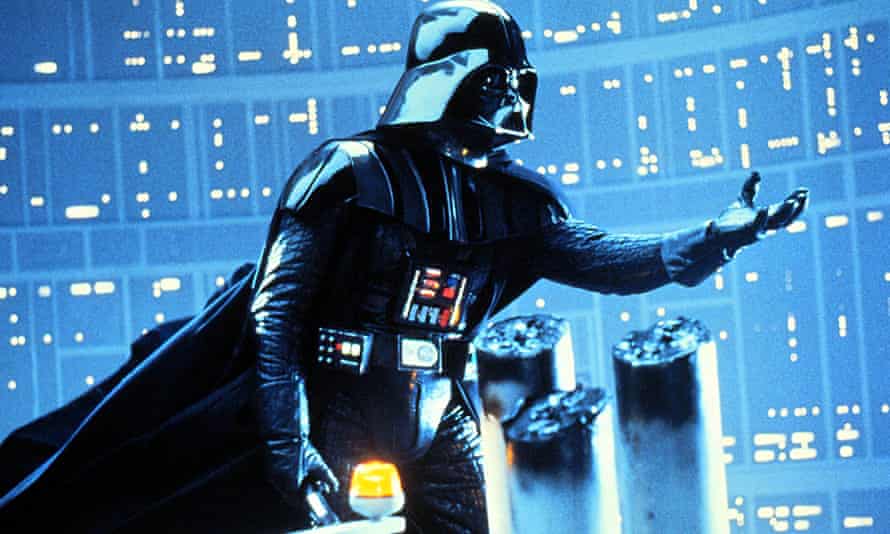
And three, it’s petty to be that spiteful. It’s also missing the point of Star Wars. The franchise started as a science-fantasy commentary on The American Military Complex, with The Empire being an on-the-nose parallel to Nazi Germany. There’s a reason the baddies wear scary clothing, are called “Stormtroopers” and are led by a towering, angry man in a black suit and helmet. George Lucas, for all his flaws, was making a statement about war and the military. It’s in the title! And by being so hateful, you miss that.

As a side-note, it breaks my heart to see the fandom behaving like The Empire. It also breaks my heart to see them act high-and-mighty when legitimate criticism gets lobbed their way. Because Star Wars is a goofy franchise. The writing’s kitschy, the acting’s pretty bad and there are many dramatic moments that are so over-the-top that they end up being hilarious. If you want proof, re-watch the saga. The campy nature of these films isn’t subtle.

I appreciate the irony of me being angry about angry fans. It’s not lost on me. And I recognize that I’m also giving in to this toxicity. But I don’t care, because I do care. I care that a franchise has made a generation this nasty, and that it has real world ramifications. But mostly, I care because it doesn’t have to be this way.

A wise person once said that no one hates Star Wars more than Star Wars fans. I think this is accurate. Another wise person once reminded everyone that Star Wars is a franchise about space wizards intended for children. I think this is also accurate. Besides, Star Wars doesn’t belong to one individual or group. Like a game of Dungeons and Dragons, Star Wars is malleable enough to be added to over time. And that’s what makes it great, not if X movie’s better than Y movie.

Wednesday, April 28, 2021

Revisiting Pokémon Snap

My final post of 2020 was a discussion of the video games I’d played during the pandemic. One of them was Pokémon Snap, which took a lax approach to the franchise by having you capture Pokémon metaphorically. Despite being archaic nowadays, especially in light of photography taking off with the digital age, the game was a big hit back in the day, earning a cult following and being one the N64’s most-rented titles. And with a sequel debuting soon, albeit 22 years later, I figured it was time to discuss it in more detail.


The premise is quite simple: you take the role of Todd Snap, an aspiring photographer recruited by Professor Oak to observe wild Pokémon. Armed initially with nothing but a camera and an on-rails cart, you traverse environments and photograph the critters in their natural states. It’s a simple premise, and on paper it sounds mundane, but there’s depth to the mechanics that make it all worth it. I say that despite some minute frustrations I still have.

One of the key elements that makes Pokémon Snap great is its accessibility. It embodies the “easy to pick up, yet difficult to master” philosophy, as getting the “perfect shot” requires patience and good timing. This dichotomy makes it worth returning to previous levels as you acquire more gadgets, especially as opportunities for photographs that wouldn’t have existed prior become more-apparent.

While being simple, you also can’t do whatever you want. Todd can’t leave his cart and explore, he must remain on the predetermined track. Additionally, any obstacles that impede movement, like an unhatched egg, have to be cleared to progress further. Finally, you only have 60 slots for photos. That number does reset when you re-enter a level, but the limitation forces efficiency.

Which leads to the most-important piece of the experience: Professor Oak. Upon completing a level, your arsenal of photographs is shown to you in full-force. You then pick one photo per Pokémon and take it to be graded. It’s fun hearing him speak and reading his predetermined lines, but Oak isn’t always the best judge of quality. Sometimes he’ll be too critical and nitpick details. Other times he’ll completely ignore your efforts. And then there are times where his grading makes no sense. It’s a missed opportunity in that regard, and you quickly learn that Professor Oak isn’t the best at judging, but it’s still funny and entertaining.

Aesthetically, the game’s pretty simple. The 7 courses are pretty bare-bones, and the N64’s limitations have made the visuals and layouts look that much more limited nowadays. But what it lacks in technical prowess it makes up for in appeal. Each of the courses is unique and brimming with Pokémon, and while they might behave a certain way, they give off the illusion of agency too. If you anger the Magmar near the Charmander in the Volcano level, it’ll breathe fire at it, knock it out-cold and cause it to evolve into a Charmeleon. In the Tunnel level, if you hit the Electrode guarding a blocked-off path at the end, it’ll explode and reveal a path to progress further. Some of these tidbits blew my mind when I first discovered them, and even now it’s worth noting how much care went in.

After unlocking the first 6 levels, you’re given a special quest. Professor Oak has been searching for the infamous Mew this whole time, and he needs you to photograph signs from each level to find it. You’re then forced to backtrack and look for clues to help in your new objective, and the game becomes an interactive version of I Spy with photography. This seems like a tedious time-waster initially, but finding these signs is one of the highlights. It’s also neat seeing how every tool you’ve collected gets used for the objective.

The game’s music’s also deceptively simple. Despite each track playing on loop, the tunes are quite catchy and pleasant. Standouts are the Beach and the Cave, although it’s hard to pick a favourite. To quote an age-old cliché: everyone’s a winner!

If I have any complaints, they’d be about how I’m left wanting more. For one, the game has only 63 of the original 151 Pokémon, and quite a few are repeats. This is especially apparent with the final level only containing Mew. It’s not like there couldn’t have been more variety if they cut down on the number of Pikachu, so why the game settled on 63 is beyond me. But I guess it’s too late now...

Another complaint I have is with the overall experience. To be fair, I have no problem with Pokémon Snap being 3-hours. I’d happily spend an afternoon beating it! But there’s little to entice you to return when you’ve photographed all 151 Pokémon. And this is with the additional challenges and secret third ending. I’d much sooner restart the game from scratch than do that, honestly!

Finally, the game lacks a multiplayer option. I know it’s unfair to gripe about that, but Pokémon Snap practically begs for it. It’s a missed opportunity to not be able to play this with friends, and I wish HAL Laboratory foresaw that. It’s not like the N64 wasn’t known for multiplayer games, after all! And given how HAL’s biggest entry for system, Super Smash Bros., had multiplayer functionality, I’m surprised it wasn’t included here too.

Still, these are minor quibbles. Is Pokémon Snap winning awards for “Best Game on the N64”? No. Is it the most-enjoyable video game I’ve ever played? Again, no. But it’s stood the test of time, something many N64 titles haven’t. And with the sequel arriving 22 years later, that it endures after all these years says something. At least, I think it does.

Tuesday, April 13, 2021

One Year Later

COVID-19.


Simply uttering that makes many people angry. I know it sparks intense emotions in me, considering how poorly parts of the world have reacted to it. Regardless, SARS CoV-2, or COVID-19, has rocked the world’s stability. At best, it’s been a rough 13 months since The WHO declared it a pandemic. At worst, it’s been a nightmare.

Personally, though, COVID-19 has been an intense, mixed bag. Starting in late-March, I was furloughed from my courier job. Food was initially scarce, and general panic and anxiety skyrocketed. It quickly became a nightmare navigating basic essentials that I took for granted. I couldn’t even go shopping, lest I bring home the virus through fomites.

But it hasn’t been an entire loss. For one, I finally learned how to play Settlers of Catan, a game I was too scared to try. A forced staycation opened up opportunities I never thought possible, so I figured that was worth it. So I learned, even if I’m not the best anyway.

Two, I had many social opportunities online. Before April 2020, if you’d have asked me what Zoom was, I’d have scratched my forehead in confusion. After April 2020, however, it became my lifeline. Whether it was talking to colleagues from work, activities via social groups, or simply talking to friends and family, Zoom was the go-to platform. So much so that I even got a monthly subscription.

Three, my possibilities for skill expansion opened up. In the past 13 months, I’ve taken a novel writing course, joined a writer’s group, listened to various MasterClass lessons and completed an office administration course. I wouldn’t have done any of this without the pandemic. I’m not thrilled it had to happen this way, but I’m grateful.

Four, I wound up with a new job. In December I secured a position at a grocery chain as a lot associate. I, basically, am now responsible for scouting shopping carts from the parking lot, bringing them to the main entrance and spraying them for customers. It’s not my ideal job, I’d have preferred something at-home, but it at least got me socializing. And it gave me something to do outside of playing video games and watching YouTube videos.

And five, I’ve become a face-mask aficionado. Prior to the lockdown, I didn’t have masks in my wardrobe. Face-masks were something I despised, and I hated putting them on when I was recovering from a bad cold. Nowadays they’re not so bad. I’ve even built up a modest collection!

The pandemic has been a blessing and a curse. On one hand, it’s been the worst time for my tics and anxiety, both of which have been out of control. But, on the other hand, it’s shown how valuable everything I took for granted was. And as my community enters its third lockdown to combat the more contagious strains, I see that even more. I hope I’ll take that to heart.

Since this piece is a little bit short as is, I’ll end it with a poem I wrote after receiving my first Pfizer shot. Those who follow me on Facebook will have already seen it, since that’s where I originally posted it, but it’s to the tune of “Who Knows One?” from the Haggadah:

“Who knows one? I know one! One is for the pandemic, may it be damned forever!

Who knows two? I know two! Two is for both doses of the vaccine, one is for the pandemic, may it be damned forever!

Who knows three? I know three! Three is for the vaccine types available in Canada, two is for both doses of the vaccine, one is for the pandemic, may it be damned forever!

Who knows four? I know four! Four is for the four people who were in my household during this pandemic, three is for the vaccine types available in Canada, two is for both doses of the vaccine, one is for the pandemic, may it be damned forever!

Who knows five? I know five! Five is for the guests I had outside for my birthday last year, four is for the four people who were in my household during this pandemic, three is for the vaccine types available in Canada, two is for both doses of the vaccine, one is for the pandemic, may it be damned forever!

Who knows six? I know six! Six is for the major Chagim last year that I couldn't celebrate with extended family, five is for the guests I had outside for my birthday last year, four is for the four people who were in my household during this pandemic, three is for the vaccine types available in Canada, two is for both doses of the vaccine, one is for the pandemic, may it be damned forever!

Who knows seven? I know seven! Seven is for the average number of chapters I wrote in my novel before we had our table reads on Zoom, six is for the major Chagim last year that I couldn't celebrate with extended family, five is for the guests I had outside for my birthday last year, four is for the four people who were in my household during this pandemic, three is for the vaccine types available in Canada, two is for both doses of the vaccine, one is for the pandemic, may it be damned forever!

Who knows eight? I know eight! Eight is for the number of months that vaccines were in trial mode, seven is for the average number of chapters I wrote in my novel before we had our table reads on Zoom, six is for the major Chagim last year that I couldn't celebrate with extended family, five is for the guests I had outside for my birthday last year, four is for the four people who were in my household during this pandemic, three is for the vaccine types available in Canada, two is for both doses of the vaccine, one is for the pandemic, may it be damned forever!

Who knows nine? I know nine? Nine is for the months that I lost last year, eight is for the number of months that vaccines were in trial mode, seven is for the average number of chapters I wrote in my novel before we had our table reads on Zoom, six is for the major Chagim last year that I couldn't celebrate with extended family, five is for the guests I had outside for my birthday last year, four is for the four people who were in my household during this pandemic, three is for the vaccine types available in Canada, two is for both doses of the vaccine, one is for the pandemic, may it be damned forever!

Who knows ten? I know ten! Ten is for the months before Pfizer was made public, nine is for the months that I lost last year, eight is for the number of months that vaccines were in trial mode, seven is for the average number of chapters I wrote in my novel before we had our table reads on Zoom, six is for the major Chagim last year that I couldn't celebrate with extended family, five is for the guests I had outside for my birthday last year, four is for the four people who were in my household during this pandemic, three is for the vaccine types available in Canada, two is for both doses of the vaccine, one is for the pandemic, may it be damned forever!

Who knows eleven? I know eleven! Eleven is for the months last year that the economy was in peril, ten is for the months before Pfizer was made public, nine is for the months that I lost last year, eight is for the number of months that vaccines were in trial mode, seven is for the average number of chapters I wrote in my novel before we had our table reads on Zoom, six is for the major Chagim last year that I couldn't celebrate with extended family, five is for the guests I had outside for my birthday last year, four is for the four people who were in my household during this pandemic, three is for the vaccine types available in Canada, two is for both doses of the vaccine, one is for the pandemic, may it be damned forever!

Who knows twelve? I know twelve? Twelve is for the number of months this pandemic has been a global crisis, eleven is for the months last year that the economy was in peril, ten is for the months before Pfizer was made public, nine is for the months that I lost last year, eight is for the number of months that vaccines were in trial mode, seven is for the average number of chapters I wrote in my novel before we had our table reads on Zoom, six is for the major Chagim last year that I couldn't celebrate with extended family, five is for the guests I had outside for my birthday last year, four is for the four people who were in my household during this pandemic, three is for the vaccine types available in Canada, two is for both doses of the vaccine, one is for the pandemic, may it be damned forever!

Who knows thirteen? I know thirteen! Thirteen is for the number of months it took for me to finally get my first COVID shot, twelve is for the number of months this pandemic has been a global crisis, eleven is for the months last year that the economy was in peril, ten is for the months before Pfizer was made public, nine is for the months that I lost last year, eight is for the number of months that vaccines were in trial mode, seven is for the average number of chapters I wrote in my novel before we had our table reads on Zoom, six is for the major Chagim last year that I couldn't celebrate with extended family, five is for the guests I had outside for my birthday last year, four is for the four people who were in my household during this pandemic, three is for the vaccine types available in Canada, two is for both doses of the vaccine, one is for the pandemic, may it be damned forever!”

Let’s pray this ends soon, so I can go outside without worrying about getting sick!

Thursday, April 8, 2021

Premiering Near You...

Last year, I wrote a piece about Mulan and how Premier Access was bad. In it, I mentioned the following:
“Perhaps I’m being cynical, but this is the kind of dystopian price gouging you hear about in science-fiction, the kind you’d read in a Phillip K. Dick novel or watch on the big-screen. It’s sketchy nonsense you’d expect in fantasy, not reality.”
I’m mentioning this again because I’d hoped it’d be a one-off. I’d hoped Disney would lose money, realize it was bad business and never repeat it. And for a while, it looked like that happened: Mulan underperformed, and Disney nixed it with Soul. Problem solved.


But then Raya and the Last Dragon, which I was highly-anticipating, was sent to Disney+ because the pandemic was still going. Sure enough, there it was again: Premier Access until June. Unless you wanted to wait, you were forced to pay $30 (or $35 in Canada) to watch it. And now Black Widow’s receiving that same treatment. Cruella too, though I’m not as interested in that one.

To be fair, it makes sense financially: Disney’s missing revenue by not having theatrical releases. Premier Access on Disney+, therefore, helps offset that. It also builds hype by making it elusive, like you’re getting something special. In that sense, it’s pragmatic.

But I don’t get everything else about this decision. For one, why charge extra on a service you’re already paying for? It’s the timed-exclusive, digital content model I hate with modern-day video games: you’ve already shelled out money for the product, why pay extra for missing content? Especially if it should’ve been there on day 1? Isn’t that self-defeating?

Two, why that much extra? Movie tickets aren’t that expensive, even in VIP theatres. And even if you’re trying to recoup revenue, that’s still ludicrous. Movies, even with concessions, don’t cost $35. I say that knowing concessions are a rip-off, as well as the reason behind them being so. If you want to convince me that Premier Access is worth it, slash the starting fee. You’ll get more of an audience.

And three, why only make this timed? I understand wanting to charge more, but go all-in if you’re being greedy. Better yet, slowly lower the cost as the weeks go on to keep the discourse going. That’d not only satisfy investors, it’d also ease concerns. As it stands now, this reads as pure greed.

That’s what bugs me the most: greed. I know Disney+ increased its yearly subscription fee to compensate for Star, but at least that opens its library to adult content. I can tolerate that. But charging extra for content that’ll be free in a few months? Does Disney think I’m a money tree?

I know Disney+ is a family-friendly streaming device, so parents will put up with this for the sake of their kids. This is especially true now, where the global pandemic has made theatregoing unsafe. I currently work in a grocery store and come into contact with lots of people, some of whom don’t follow proper protocol. I put myself at risk regularly, and I don’t have much of a choice there!

But I can’t imagine I’m alone on considering Premier Access extortion. It sure feels like it, especially given the aforementioned points. That it’s increasingly looking to be the case for Disney+ movies worries me. It worries me because of the dystopian implications that tag along with it.

Additionally, I’m concerned by the potentially negative ripple effects that Premier Access could create. I’m concerned that it could become so normalized that other streaming services might start using something similar for their exclusives. Like, HBO Max could’ve easily done this with Zack Snyder’s Justice League, especially since it’s a special circumstance. But they didn’t, and I’m glad.

Yet if AT&T or Netflix ever see the potential for money, and nothing’s ever off the table with that, we could be in for more of this financially dystopian nonsense. And that’s scary. It’s almost as if streaming services will do it because theatres are dwindling in popularity, so they can extort the masses who have fewer options for their “faves”. Streaming services also have the potential to become like digital-only gaming, too. We’re already seeing that with the dozens of services that are starting to pop up.

This goes back to a longstanding complaint I’ve had about digital content. On one hand, it’s easy, convenient and has relative ease of access. These are all benefits to ditching physical media, which is bulky, flimsy and limited in its usage. But at least physical media, for the most part, is reliable. At least I know what I’m getting upfront. I don’t have that certainty with streaming, and Premier Access is another reason why.

I guess there’s not much I can do outside of wait for titles I’m interested in to become regular movies on Disney+. That much I have power over, and I’m grateful. But that doesn’t mean I can’t be concerned and frustrated that Disney’s being greedy again. I shouldn’t be surprised, corporations aren’t my friends, but I can still feel that way about a megalith that gets bigger by the day. Because I do, and that worries me.

Thursday, April 1, 2021

"Congratulations: You're Cancelled Also!"

I know I’m late to the conversation, but let’s talk Lindsay Ellis.


Before I go into why she’s a hot-topic, I want to make something clear: I like Lindsay’s videos. I liked them even when she was The Nostalgia Chick on That Guy With the Glasses, and she became a go-to on YouTube in the years since. She makes good content. But I don’t Follow her on Twitter, as I have no interest giving in to my darkest temptations. She’s like Bob Chipman in that regard: great content creator, lousy opinions.

A few days ago, Lindsay Ellis Tweeted two Tweets that made everyone roll their eyes. One of them was how Raya and the Last Dragon “ripped off Avatar: The Last Airbender” and shared much in-common with half of YA fiction in the last while. The other was that Soul was “a movie for pro-lifers”. Both times she received backlash, prompting her to do damage control and deactivate her account.

I missed a lot of this drama because of Passover. However, it’s been archived for anyone interested in verifying it. It’s also worth noting that, despite how tone-deaf the Tweets were, these weren’t in isolation. I know it’s not a 1:1 comparison, but Ellis, like Chipman, has a history of off-colour Tweets. Why these two were the tipping point, therefore, is beyond me.

Much discussion has surfaced in light of this about “BreadTube”, or “leftist video essayists”, and how obnoxious they are. Honestly, I don’t think it’s fair to generalize, since BreadTube isn’t a monolith. But I see the concern, as some of these individuals, like Shaun from Shaun Vids, have made me quite angry. And that much of BreadTube is “white and cis” is also valid, as it limits perspectives in the conversation on racism and bigotry.

What bugs me about this now, of all times, is that it should’ve been discussed sooner. Many BreadTube personalities have large social media bases, and they’ve had them for years. With that comes the responsibility to be socially conscious, as they can do much more damage than if they were small-fries. But I don’t have such a big fanbase, so what do I know?

This is usually where I’d make a statement about how there needs to be diversity of voices in this community, and how that’d help remedy the problem. And on some level I genuinely believe that. However, there are three problems that complicate this. The first is that even with minorities there are differences in life experiences. Even in the same communities there are differences in life experiences. No two people are alike, so getting an accurate sample of where the conversation should be steered requires multiple voices.

The second is that some minority voices are dishonest. There are bad-faith actors in every community, and they openly dilute the message. Expecting individuals to always be honest is the epitome of The Scotsman Fallacy. It’s also not helpful to the first issue, especially when it involves knowing who to weed out.

The third issue, and this is the most-crucial, is that minority voices, even well-intended ones, don’t always help steer social progress. Marginalized communities routinely step on and gaslight other marginalized communities, even though that’s not helpful in the slightest. For example, some of the most-frustrating individuals I’ve dealt with have been Muslim and non-Jewish black individuals who’ve assumed that because I’m “white passing”, my Jewish identity’s linked to colonialism and, therefore, isn’t worth anything. This isn’t to indict them as a collective, but it’s been a challenge.

Going back to Lindsay Ellis, I see the frustrations surrounding her through other e-celebs. I used to love Shaun’s work until he referred to Jewish critics of Jeremy Corbyn as “bitter Blairites”, even though Jews aren’t monolithic. I was partial to Jacob Chapman’s content until he used his trans and gay identities to gate-keep queer media. Losing trust in the people I respect is so commonplace now that I’m surprised when it doesn’t happen. That’s how much the internet’s ruined discourse.

Outside of that, while Ellis’s Tweets were indefensible, and her attempts at damage control weren’t any better, some of her critics were acting in bad faith too. Did she deserve criticism? I’d say so. Does she need to understand that her words have consequences? Again, I’d say so. But did she deserve to be harassed off of Twitter? No.

I can’t think of anyone who hasn’t had at least one bad take. I’ve made many, some recently. I’m a flustered speaker in real life, so I make comments that I immediately regret. Even online, where I have time to compose myself, I’ve gotten in trouble for not properly crossing my t’s or dotting my i’s. It’s inevitable.

I’ve also heard far worse from other individuals who haven’t been called out. I’ve seen bigger profiles than Lindsay Ellis say or type stuff that was equally/more-offensive and not get called out. Or, if they have, they’d have their fans pile-drive critics. Social media’s both The Wild West and Mean Girls in that regard.

I’m not saying we should forgive Lindsay right away, if at all. I’m not the one she’s harmed, so it’s not my place to demand that for her. Like with Noelle Stevenson, only those harmed have the power to forgive her. And even then, that doesn’t mean they have to trust her again. It also doesn’t mean she’s suddenly absolved of accountability.

That said, we should be cautious of how we rebuke her. Remember, criticizing someone is simple. I do it all the time! But it’s easy to do it when we’re busy doing what we’re critiquing, and that gets lost in mob outrages. If we’re criticizing someone, even someone vile, it has to be done in a way that we don’t stoop to their level. We owe that much to ourselves.

If anything can be learned from this, it’s that people can be really insensitive at the best of times. Now, if you’ll excuse me, I have to resume throwing darts at my hostages…

Wednesday, March 24, 2021

Mrs. NC-17 Doubtfire

Zack Snyder’s version of Justice League is out on HBO Max. I’d make a snippy remark about how that doesn’t change how I feel about him, but I can’t because HBO Max isn’t available in Canada. Essentially, I couldn’t show my apathy even if I tried. Still, I’m glad fans finally get the version of the movie they wanted…even if it’s 4 hours long.


I mention this in light of #ReleasetheSynderCut getting another movie thrown into the conversation. It was a comedy from the early-90’s, and it still has a fanbase. It also stars the late-Robin Williams. I’m referring to Mrs. Doubtfire.

Mrs. Doubtfire never interested me all that much, even as a kid. I’ve seen bits and pieces over the years, but, outside of watching a comedic great don a dress and fake a Scottish accent, it never appealed to me. Additionally, the “how do I keep my secret?” aspect had already done so frequently by then that it was boring and unoriginal. But even now the movie has awful attitudes about the trans experience, making it a joke that isn’t funny.

So yeah, no real connection. But that it was recently revealed that Robin Williams had improvised so many of his lines that there were four cuts of the movie, including an NC-17 one, is interesting. And with Snyder’s version of Justice League seeing the light of day, this NC-17 cut intrigues me. It’s not like the flood doors haven’t been already been opened!

I’m not sure what to make of this news. On one hand, the possibility of this actually releasing is no longer 0%. Justice League proved that with enough interest (and lots of complaining) we could get a Director’s Cut of any movie. You simply have to demand it, and voilà: release of the “true ” film. If it’s being asked of Suicide Squad, a movie that, like Justice League, was heavily-altered for theatres, then why not Mrs. Doubtfire too?

On the other hand, I don’t think I want an NC-17 version. Ignoring how past “Director’s Cut” releases of comedies have been really unsettling-see Wedding Crashers-an NC-17 rating of the film wouldn’t really have that big a market. Remember that NC-17’s the closest a movie gets to porn, and porn has a niche market. By taking a kid’s movie and making it “almost porn”, you risk alienating what gave it mass-appeal.

Also, do we need an NC-17 version of a Robin Williams movie? I know the guy loved improvising, and some of his outtakes in Aladdin are quite funny, but there’s a reason why not everything made the final cut. Length aside, some of his jokes wouldn’t fly with theatre-goers because of how charged or offensive they are. Mrs. Doubtfire was a movie released in 90’s, when attitudes toward trans folk was still mostly deceit and/or disgust. This was the same decade that gave us the scene in Ace Ventura: Pet Detective where Ace makes police officers vomit because he reveals the antagonist had gender reassignment surgery and kept her male genitalia. With all that baggage, and especially given Mrs. Doubtfire’s premise, do we really want that?

I’m fine with a “director’s true vision”. I encourage it. But there’s a difference between telling the best story possible and understanding what doesn’t work. If George Lucas and Star Wars is indication, sometimes saying “no” to something is the right call. You can’t include all of your ideas and expect them to land, after all!

I get it: it’s tempting to see what we missed out on. I understand that, especially with a comedic legend like Robin Williams. I adored him as The Genie in Aladdin, constantly adding life to the scenes he was in. But part of what made that work was that, while many of his lines were improvised, the final cut knew what to keep and what to discard. Besides, you can always watch what didn’t make it on YouTube.

Perhaps that’d be a good compromise. Like with Aladdin, compiling the best lines and jokes from Mrs. Doubtfire that didn’t make it and including them as a bonus feature could be the right course of action. I know that’d mean being selective, but remember: this is Robin Williams. The man was famous for mile-a-minute jokes, so there’d never be a shortage of material.

It’s possible that I’m out of my league, or that I’m overthinking this. I’m not a marketer, so I don’t have my pulse on what’s appealing. I’m also not an expert, so take what I say with a grain of salt. But I do know art, being a writer myself, and I know that not every idea is a good one. An NC-17 version of Mrs. Doubtfire, as tempting as that may sound, doesn’t seem like a good idea to me.

Besides, I’d rather a Director’s Cut of something that warrants it, like Batman Forever. Make it happen, Warner Bros.! You know you want to!

Popular Posts (Monthly)

Popular Posts (General)